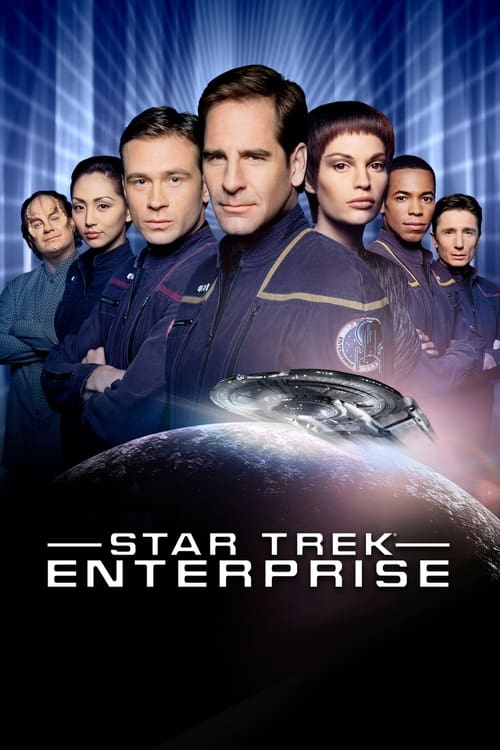
Star Trek: Enterprise
Season 2 Analysis
Season Overview
In one short year, Jonathan Archer, captain of the starship Enterprise NX-01, has made a name for himself and his crew, both with his Starfleet superiors and perhaps less favorably with mankind's alien neighbors.
Season Review
Categorical Breakdown
Leadership and responsibilities are assigned based on rank and technical skill. The show avoids lecturing on privilege and ensures that characters like Archer and Tucker are respected for their competence without their demographic backgrounds being framed as problematic.
The narrative centers on Earth's emergence as a galactic power with a focus on human ingenuity. It treats the pioneers of Starfleet with respect and portrays the advancement of human civilization as a noble and necessary pursuit.
Female characters like T'Pol and Hoshi Sato are depicted as professional and capable but also as having realistic flaws and vulnerabilities. The male leads are competent and heroic, maintaining a balanced dynamic that avoids the emasculation of men or the insertion of 'Girl Boss' tropes.
The season adheres to traditional character dynamics and focuses on mission-driven plotlines. While sci-fi allegories are occasionally used to explore social exclusion, the series does not feature contemporary gender ideology or the centering of alternative sexualities.
The show operates from a secular humanist perspective that values science and logic. It maintains a neutral stance toward spiritual matters, showing respect for various alien beliefs through Doctor Phlox, though it lacks an acknowledgment of objective higher moral laws.