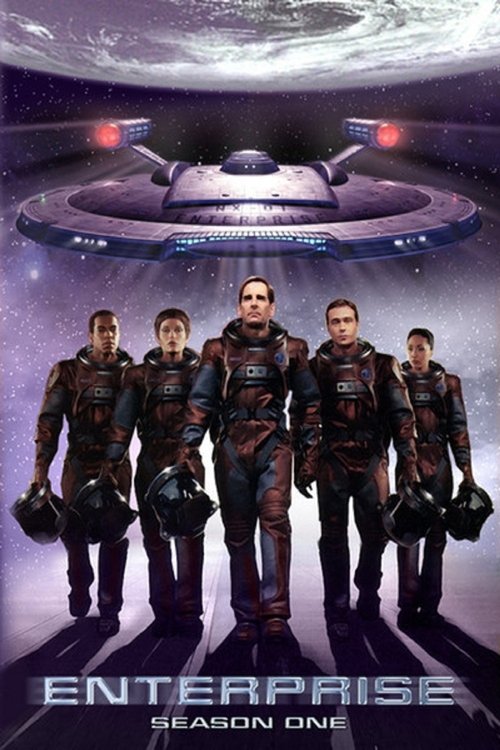
Star Trek: Enterprise
Season 1 Analysis
Season Overview
Captain Jonathan Archer, son of the warp engine pioneer Henry, assembles a crew and takes the new starship Enterprise out into the heavens.
Season Review
Categorical Breakdown
The narrative prioritizes professional expertise and military rank over social justice themes. Captain Archer leads a crew chosen for their specific technical abilities rather than their place on an intersectional hierarchy.
The show portrays Earth’s development of warp technology as a crowning achievement. It rejects the idea that human history is a catalog of shame, instead framing it as a journey toward the stars and defending human culture against Vulcan condescension.
Masculinity is portrayed as protective and decisive through characters like Trip Tucker and Malcolm Reed. T'Pol and Hoshi Sato are integrated into the chain of command based on their mental and technical contributions without emasculating their male counterparts.
Human characters engage in traditional romantic pursuits. The script avoids modern gender theory and keeps character private lives centered on standard norms, focusing entirely on the mission at hand.
While the setting is secular, it avoids attacking religious belief. Characters show a respectful curiosity toward spiritual traditions, and the show focuses on discovery and scientific ethics without adopting a posture of moral relativism.