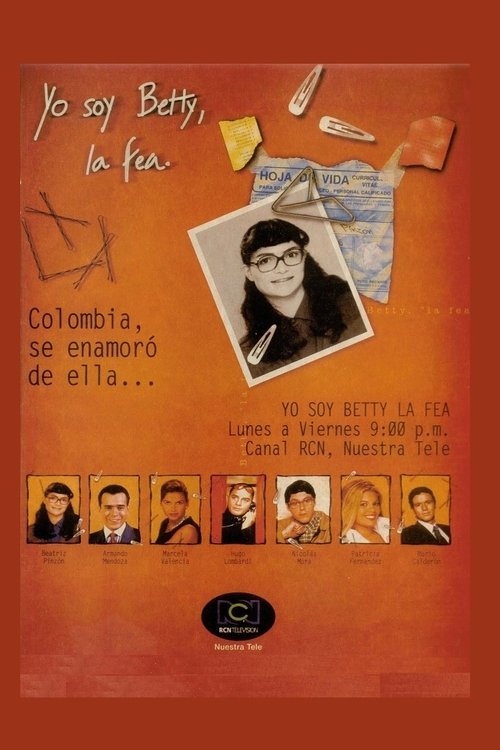
Yo soy Betty, la fea
Season 1 Analysis
Season Overview
No specific overview for this season.
Season Review
Categorical Breakdown
The core of the narrative is not centered on race or immutable characteristics through an intersectional lens, but on meritocracy versus superficiality. The protagonist's struggle is based on her 'ugliness' and lower-middle-class background, not a vilification of a specific racial group. Characters are judged by the content of their soul and competence; Betty’s financial wizardry is her redeeming trait. Casting is culturally authentic to its Colombian setting.
The show is an internal critique of the flaws of Colombian society, specifically the corruption, superficiality, and 'machismo' within the fashion industry and the upper class. This critique is aimed at specific toxic behaviors, not a blanket hatred of the home culture. Betty's family unit is portrayed as a source of strength, traditional values, and moral grounding, which functions as a positive institution against the chaos of the elite world.
Betty is an extremely intelligent and competent woman who challenges traditional gender roles by being more capable in business than all her male bosses. The show critiques the 'machista, aggressive, and unfaithful' nature of the male lead, Don Armando, and celebrates female competence. However, the show's ultimate arc is a classic 'ugly duckling' transformation that leads to a traditional romance and marriage, which avoids the pure 'Girl Boss' trope and anti-natalist messaging. Fulfillment is found in both career and a traditional relationship.
Alternative sexualities are not centered in the plot, and the narrative focuses on a traditional male-female pairing. The show features a flamboyant homosexual character, Hugo Lombardi, but he is a secondary figure and often a caricature, adhering to a pre-woke trope rather than a 'Queer Theory' lens. There is no deconstruction of the nuclear family or promotion of gender ideology.
There is no overt hostility toward religion, specifically Christianity, in the narrative. The moral framework of the story—that internal character, competence, and goodness of the 'soul' are what truly matter—points toward a transcendent morality. Betty’s traditional family is highly moralistic and is a positive force in her life, contrasting with the moral relativism and corruption of the fashion elite.