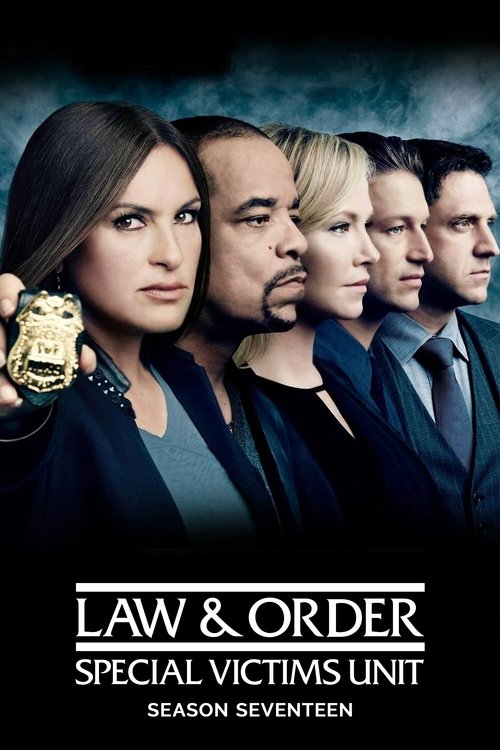
Law & Order: Special Victims Unit
Season 17 Analysis
Season Overview
No specific overview for this season.
Season Review
Categorical Breakdown
The episode 'Community Policing' directly centers the narrative on the escalating conflict between Black America and the police, with the storyline implying systemic conflict is more important than the individual crime. The episode explores the internal conflict within law enforcement regarding race and justice, which some viewers felt meant the police failed to side with the victim.
The season contains episodes that focus on systemic failure within institutions, such as the critique of the overworked and compromised Department of Child Protective Services in 'Institutional Fail.' Another episode critiques the difficulty police have in investigating crimes in marginalized communities. The focus is on the failure of American systems, though it is not a direct demonization of Western civilization itself.
Captain Benson continues her role as the consummate female authority, and there are observations that male detectives are increasingly treated as incompetent or subordinates to her perfect decision-making. Detective Rollins' storyline involves an unplanned pregnancy outside of a traditional family structure, which creates a conflict where she prioritizes her career and requires her mother's aid, fitting the career-over-motherhood trope.
The episode 'Transgender Bridge' directly addresses trans issues, focusing on 'trans bashing and bullying,' which centers alternative sexualities and gender identity within the narrative. This episode explicitly frames the cultural conflict as one involving bigotry against gender-nonconforming individuals, aligning with the highest score on the 'Queer Theory' lens.
While not a primary focus, the show often operates from a position of moral relativism, where the 'truth' of a crime is frequently subjective and complicated by circumstance, rather than adhering to an objective moral law. The season contains critiques of institutions, but no direct, repeated vilification of Christianity or organized religion is present in the main plotlines.