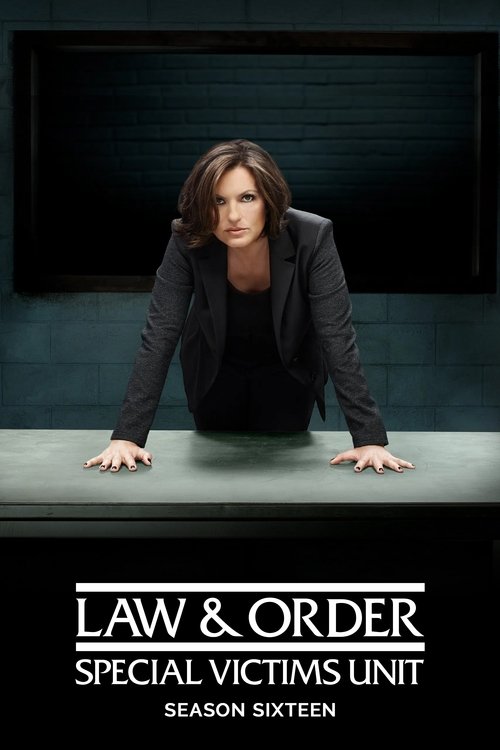
Law & Order: Special Victims Unit
Season 16 Analysis
Season Overview
No specific overview for this season.
Season Review
Categorical Breakdown
The narrative places a high importance on intersectional concepts like 'rape culture' and gender politics, particularly in episodes dealing with campus sexual assault ('Devastating Story') and the misogynistic violence of an 'incel' figure ('Holden's Manifesto'). The primary male perpetrator in the latter is a young, white, socially awkward figure who turns violent against women. The season features diverse main characters, but the moral narrative sometimes focuses on the perceived systemic nature of oppression or misogyny rather than pure individual malice.
The central conflict is still focused on upholding the integrity of American institutions (the NYPD, the District Attorney's office) by rooting out crime and corruption. Critique is leveled against *failures* of the system and individual officers, but this is done from a position of loyalty, seeking to correct the institution rather than framing Western civilization as fundamentally corrupt or evil.
The season centers on Sergeant Olivia Benson, a classic 'Girl Boss' archetype who is promoted and successfully navigates single motherhood by adoption while maintaining a commanding, professional image. An entire episode is dedicated to confronting the ideology of an incel-like killer who blames women for his lack of success. However, Benson's personal choice to prioritize the nurturing role of motherhood (through the Noah storyline) and a conversation where she appears to encourage motherhood to a female colleague prevents a perfect 10 for pure anti-natalism.
While the show generally champions progressive causes, the season does not center its narrative on the 'Queer Theory Lens.' There is no major storyline focusing on gender ideology, non-binary identity, or the aggressive deconstruction of the nuclear family. Alternative sexualities are present in background characters and cases, but they do not serve as the primary ideological axis of the season's storytelling.
The core of the show is built on an objective moral code where sexual assault and abuse are transcendent evils, which implicitly aligns with a higher moral law rather than subjective 'power dynamics.' There is no major episode actively demonizing Christianity or religious faith as a source of evil. Any criticism of religious figures is typically reserved for individual villains who abuse their authority, not the faith itself.