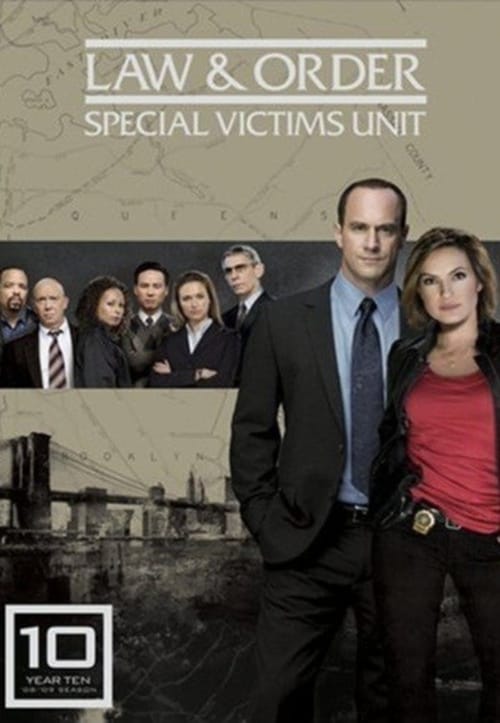
Law & Order: Special Victims Unit
Season 10 Analysis
Season Overview
Stabler confronts his own demons when his daughter is caught with drugs, and Benson follows connections between an abused child and an attack on a woman.
Season Review
Categorical Breakdown
The narrative does not heavily rely on an intersectional hierarchy or systemic oppression, which keeps the score moderate, but one episode featuring a black detective winning an NAACP Image Award for his performance in a guest role suggests a subtle acknowledgment of identity-based merit. The core cast is diverse, yet character motivations remain primarily tied to individual psychology and criminal behavior rather than a critique of 'whiteness.'
The institutions of the police and the justice system are fundamentally upheld as necessary forces for good, even if they are flawed. The drama centers on individuals who violate the law, not a critique that Western civilization or American heritage is fundamentally corrupt. There is no explicit theme of civilizational self-hatred or deconstruction of heritage; the score is low.
The score is high due to the season's intentional introduction of overt 'pro-feminist messages.' The new ADA, Kim Greylek, advocates for classifying rape as a hate crime. Episodes explicitly frame the denial of emergency contraception by a pharmacist (often a moral/religious position) as an act that enables or exacerbates abuse against women. The narrative aligns womanhood with 'Girl Boss' defiance when Benson champions a woman who killed her abusive husband and escaped custody to achieve her own justice.
The season contains no overt focus on 'Queer Theory' or gender ideology, especially for children. The show's subject matter frequently involves issues of sexual identity and violence, but the main thrust remains a police procedural investigating heinous crimes, not an effort to deconstruct the traditional nuclear family as 'oppressive.' The score is moderate as the show deals with 'sexual preferences' as a matter of course.
The score is elevated because the show frames traditional religious morality as an obstacle to justice. A 'super-Catholic conservative white boy' who advocates for chastity is introduced as a murder suspect. The pharmacist who pushes 'anti-choice themes' like adoption is depicted as a morally judgmental figure whose actions harm a victim. These portrayals suggest that traditional faith is a source of rigidity and malice rather than a source of strength or moral law, often making religious characters the antagonists or obstacles in the 'ripped from the headlines' plots.