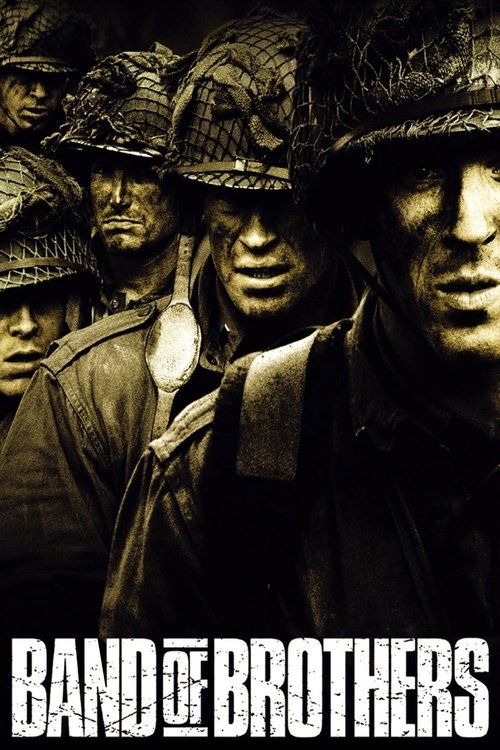
Band of Brothers
Season 1 Analysis
Season Overview
No specific overview for this season.
Season Review
Categorical Breakdown
The narrative operates entirely on universal meritocracy; a man's worth is judged by his performance in training and combat. Leader figures like Winters gain respect through competence and moral conduct, contrasting with incompetent or abusive officers like Sobel. The casting is historically authentic to the time and unit, consisting overwhelmingly of white males, with no 'race-swapping' or vilification of 'whiteness' to serve a political lens.
The series is a monumental expression of respect and gratitude for the American soldiers' sacrifice in a morally unambiguous war. The men of Easy Company are depicted as patriots fighting to save Western Civilization from Nazism. The liberation of a concentration camp late in the season serves to solidify the necessity and righteousness of their fight. Institutions, specifically the US Army company and the nation it serves, are implicitly viewed as shields against chaos.
The score is kept at a low '2' simply because the series is almost exclusively focused on an all-male combat unit, making a direct analysis of gender dynamics difficult. There are no primary female characters and certainly no 'Girl Boss' or 'Mary Sue' tropes. The central relationship dynamic is 'brotherhood,' and the masculinity is protective, centered around mutual survival, competence, and sacrifice. The anti-natalist/anti-family messaging is absent.
The series adheres to the Normative Structure as a historical depiction of a WWII US Army company. The narrative contains no elements of Queer Theory, centering of alternative sexualities, deconstruction of the nuclear family, or lecturing on gender identity. Sexuality remains a private, non-central aspect of the soldiers' lives.
Faith is not a dominant theme, but the series does not exhibit hostility toward religion or embrace moral relativism. The fight against the Nazis, culminating in the discovery of the concentration camp, clearly affirms an Objective Truth and a higher moral law regarding good and evil. The core themes of sacrifice, duty, and protective brotherhood serve a transcendent moral framework without resorting to anti-theistic messaging.