Raw
Season 9 Analysis
Season Overview
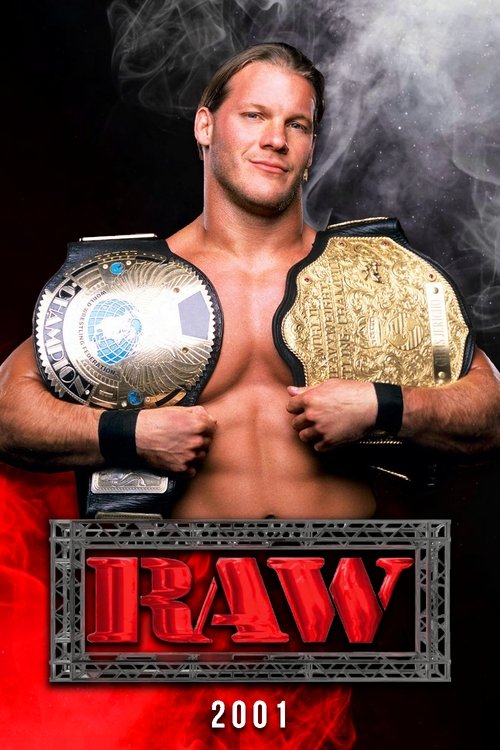
WWE stands tall as the victor of the Monday Night War in 2001, but an invading alliance between WCW and ECW threatens the very existence of WWE. Plus, WWE gets a new stylin' and profilin' co-owner and more.
Season Review
Categorical Breakdown
The main conflict is not based on race or immutable characteristics, but on corporate and territorial loyalty (WWF vs. The Alliance). Character success is determined by winning matches and gaining power, a universal meritocracy of ability and cunning. The biracial superstar, The Rock, is a dominant main event figure, showcasing colorblind casting and a focus on in-ring ability and charisma. There is no narrative on privilege, systemic oppression, or vilification of white males as a class.
The central 'Invasion' storyline is about the 'home' promotion (WWF) uniting to defend itself against the 'invading' forces (WCW/ECW), explicitly framing the home culture as superior and worth defending. After the 9/11 attacks, the show’s moniker was changed from *Raw Is War*, and segments featured overt displays of American patriotism, which is the direct opposite of civilizational self-hatred. Institutions like the company (WWF) and the nation are treated as worthy of defense and loyalty.
Female characters hold prominent positions, notably Stephanie McMahon (owner of ECW in the storyline) and Debra (Stone Cold Steve Austin's kayfabe wife), giving them power. However, the female talent are largely presented through the highly sexualized 'Attitude Era Diva' aesthetic. Storylines often involve traditional female-manager roles, catfights, and dramatic confrontations built on marital or romantic betrayal, not on an ideological 'Girl Boss' structure. Males are not universally emasculated; instead, masculinity is celebrated and exaggerated, though males are often manipulated by the female heels.
The narrative structure is strictly heteronormative. The show's humor and drama rely heavily on traditional male-female pairings and conflicts (e.g., infidelity, marriage, family feuds). There is no presence of 'Queer Theory' content, centering of alternative sexualities, or deconstruction of biological reality or the nuclear family beyond its use as a soap opera plot device for shock value.
Religion is not a central theme and is never the target of sustained hostility or critique. Morality, while often 'subjective' within the kayfabe heel/face dynamics, operates on a clear good vs. evil dichotomy for the audience. Faith is rarely mentioned, and when it is, it is either as a neutral character attribute (e.g., The Undertaker's dark aesthetic) or for light, often positive, use in a character's gimmick (e.g., Kurt Angle's Olympic hero persona is sometimes framed with clean-cut, moral overtones).