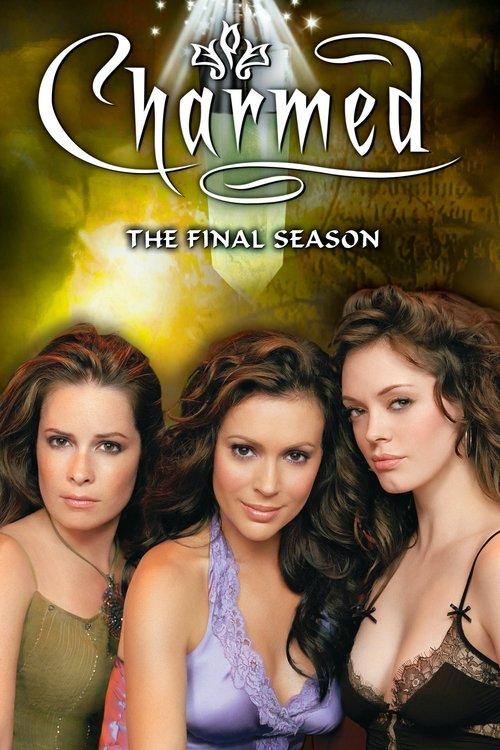
Charmed
Season 8 Analysis
Season Overview
The sisters have to live under false identities to be free of demons. Each sister remains unhappy and eventually decides to return to their Charmed lives. Paige, however, begins helping a young witch named Billie, who eventually discovers the sisters' magical secrets but agrees to keep them under wraps in exchange for witchcraft training.
Season Review
Categorical Breakdown
The show judges characters by their magical abilities and moral choices. It lacks intersectional lecturing and maintains a consistent cast without forced diversity or commentary on systemic privilege.
The sisters fight specifically to preserve their ancestral home and family history. They value the traditions passed down through their bloodline and view their heritage as a source of strength.
While the sisters are powerful 'Girl Boss' archetypes, the season explicitly rejects anti-natalism. The series finale frames motherhood and traditional marriage as the highest form of fulfillment for all three leads.
The season remains strictly heteronormative. Every romantic subplot involves traditional male-female pairings, and there is no inclusion of gender ideology or queer theory.
The narrative operates in a Wiccan-inspired vacuum where 'The Elders' act as a flawed bureaucracy. It favors moral relativism and 'destiny' over objective religious truth, though it avoids direct attacks on established faith.