Kamen Rider
Season 6 Analysis
Season Overview
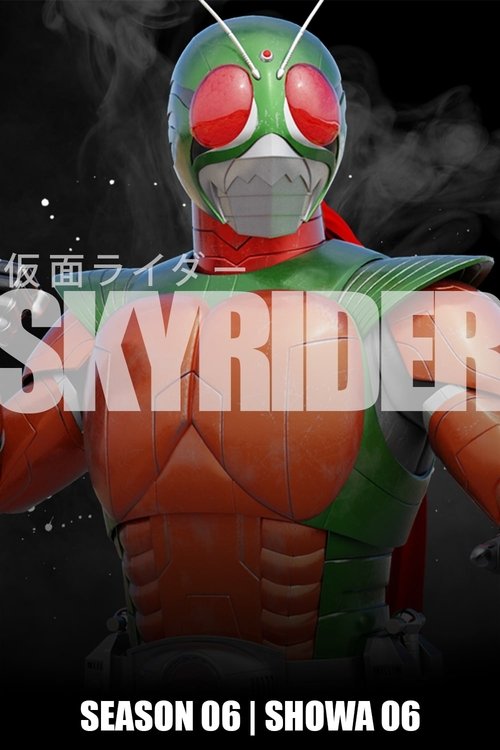
Doctor Keitarō Shido, an acclaimed scientist, has been kidnapped by the terrorist organization Neo-Shocker in order to exploit his expertise in robotics technology. Desperate to escape, he convinces Neo-Shocker command to allow him to operate on an injured camper. Explaining that he can turn the camper, Hiroshi Tsukuba into a powerful Neo-Shocker warrior, they allow Doctor Shido to operate. However, he quickly turns the tables on them, transforming Hiroshi not into an evil monster, but into the powerful warrior Skyrider, using his new found abilities to combat the evil Neo-Shocker menace.
Season Review
Categorical Breakdown
The plot hinges entirely on the hero's moral conviction and physical ability to fight evil, not on his race or any immutable characteristic. Hiroshi Tsukuba is a typical Japanese hero of the era, and the casting is organic to the setting and production. The focus is on universal good versus evil and the merit of a character's actions.
The villain organization, Neo-Shocker, frames the entire human race as an 'infestation' that carelessly consumes resources, aiming to commit genocide to save the planet. This misanthropic ideology reflects a form of civilizational self-hatred—valuing the planet over humanity. However, the hero, Skyrider, exists solely to protect humanity and prevent the annihilation of civilization, strongly affirming the value of the 'home culture' against its radical detractors.
The gender dynamics are traditional and complementary to the 1979 setting. The hero, Skyrider, is the male protector and combatant. Female characters like Midori Kano and other allies play supportive roles, managing the hero's base of operations and providing aid. They are not depicted as bumbling or toxic, and there is no messaging about motherhood as a 'prison' or a 'Girl Boss' trope displacing the hero.
The narrative maintains a normative structure, typical for a Japanese children's program of the late 1970s. The show does not feature any overt queer coding, alternative sexualities, or discussion of gender ideology. Sexuality is neither a public nor a private topic for the main conflict or character development.
The primary villain, the Great Leader of Neo-Shocker, is depicted as the master of a cult-like organization whose true form is a dragon-like alien, demanding human sacrifices and seeking world domination through evil means. The hero fights for a clear and objective moral good—the protection of innocent life and justice—against an explicitly wicked, false idol and power structure. Faith is not explicitly a plot point, but the moral universe is one of objective truth and higher moral law, which is the antithesis of moral relativism.