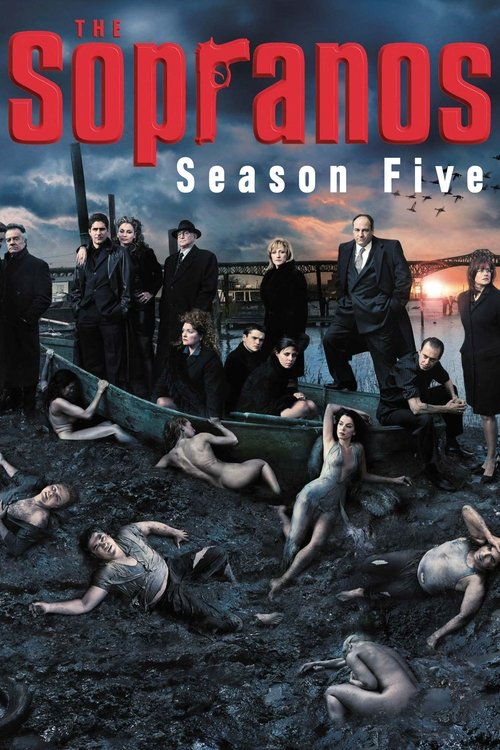
The Sopranos
Season 5 Analysis
Season Overview
In season five, a separated Tony and Carmela negotiate family and money issues. Meanwhile, Tony's reunion with paroled cousin Tony Blundetto may endanger his alliance with Johnny Sack; and Adriana gets in deeper with the Feds.
Season Review
Categorical Breakdown
The narrative's focus is on the power struggles and pathology within a closed, nearly all-white (Italian-American) criminal hierarchy. Characters, particularly Tony and his crew, frequently express strong racial and ethnic prejudices, but this is portrayed as a sign of their own ignorance and moral failing, not a vilification of 'whiteness' from the show's perspective. The storyline operates on character merit and the hierarchy of crime, entirely devoid of intersectional lecturing or forced diversity.
The series functions as a deep critique of the 'American Dream' and the moral corruption of a specific subculture, with the home and family institutions constantly shown as deeply compromised. This is a deconstruction of a *heritage* that the characters cling to, but it is not hostility toward Western civilization generally, nor is it driven by the 'Noble Savage' trope. The chaos is a result of the characters' criminal choices, not a systemic indictment of their ancestry or home culture by an outside moral authority.
The gender dynamics are overtly patriarchal and traditional. Female characters like Carmela are seen negotiating their position within a male-dominated world, ultimately prioritizing financial security and the role of 'wife/mother' in a dysfunctional home. The plot revolving around Adriana's attempt to gain agency is brutally ended by her murder, completely rejecting the 'Girl Boss' trope. Men are not emasculated but are portrayed as psychologically complex and often brutal patriarchs and adulterers.
Alternative sexualities are not centered and are only referenced in the context of ridicule or fear within the mobsters' traditional and homophobic environment. The series maintains a normative male-female pairing and nuclear family structure as the standard, however dysfunctional that structure is shown to be. The show contains no promotion of gender ideology or queer theory perspectives.
The main characters are explicitly, though hypocritically, Catholic. Carmela's frequent religious observance is consistently undercut by her materialism and complicity in Tony's crimes, which suggests a deep spiritual vacuum. The show embraces a high degree of moral relativism in action, but it does not formally lecture that traditional religion is the *root of evil*; it simply shows the characters’ failure to adhere to their professed faith.