South Park
Season 25 Analysis
Season Overview
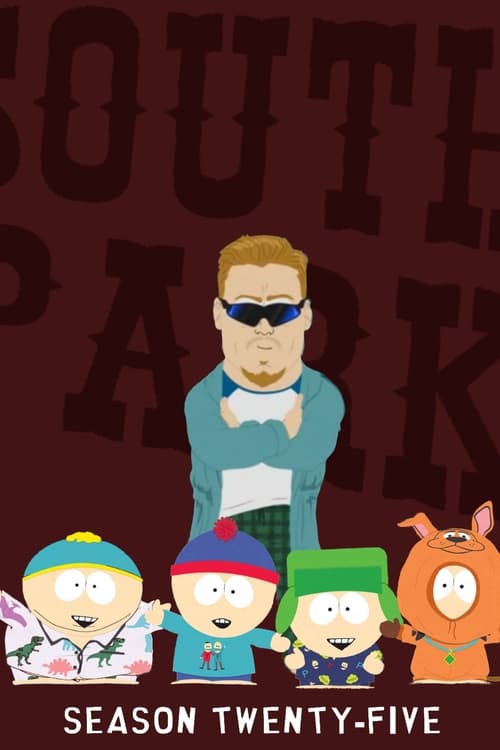
Join Stan, Kyle, Cartman, and Kenny as they correct a long-held misconception about one of their classmates, deal with moody teenagers, and celebrate Pajama Day at South Park Elementary. For them, it's all part of growing up in South Park!
Season Review
Categorical Breakdown
The narrative is primarily a satire of Identity Politics, specifically performative allyship. Randy Marsh attempts to diversify his business to avoid being canceled, demonstrating a critique of fear-based, non-meritocratic hiring. The famous retcon of 'Token Black' to 'Tolkien Black' is a meta-joke about racial labeling and a punchline for white ignorance, not an authentic push for intersectional hierarchy. The show condemns the performative actions of white characters like Randy and PC Principal, but this constant focus on race and allyship keeps the score from being at the minimum, as the subject matter is highly central to the plot.
The season contains low Oikophobia. The townspeople are not depicted as fundamentally corrupt or racist, but rather as easily misled and absurd, especially when they revolt against external mandates like a pajama ban. The 'City People' episode frames small-town life as being attacked by 'city people' who seek to appropriate and gentrify it, which is the opposite of civilizational self-hatred. Institutions like the family are largely intact, although heavily flawed in a classic *South Park* fashion.
Feminist themes are not centered or explicitly lectured. There are no 'Girl Boss' characters presented as flawless. Wendy Testaburger is an intelligent and competent female character, a longtime show tradition, and she is tasked with solving an adult problem, but the narrative does not rely on emasculation of males as a primary source of humor. The focus is on traditional male characters (Stan, Cartman, Randy) and their neuroses, which are depicted as incompetent, but the critique is of their general character flaws, not their masculinity as a whole.
The LGBTQ+ score is higher due to the presence and normalization of non-traditional sexual dynamics. Mr. Garrison, an established gay character, is a main figure in 'Pajama Day,' where his polyamorous, cheating behavior is treated as a normal part of his chaotic life, serving as the inciting incident for the entire plot. PC Principal, the agent of 'woke' ideology, is shown in a committed relationship with a woman, and there is no focus on gender ideology or transitioning for child characters, which prevents the score from reaching a 10.
The season does not contain any direct attacks on religion, specifically Christianity. South Park operates in a world of inherent moral relativism where all belief systems and institutions are mocked, but this season contains no explicit Anti-Theism plotline. Faith is not presented as a source of strength, but neither are Christian characters singled out as villains or bigots. The moral landscape remains a spiritual vacuum by default of the show's nature, but there is no plot that actively vilifies faith.