South Park
Season 22 Analysis
Season Overview
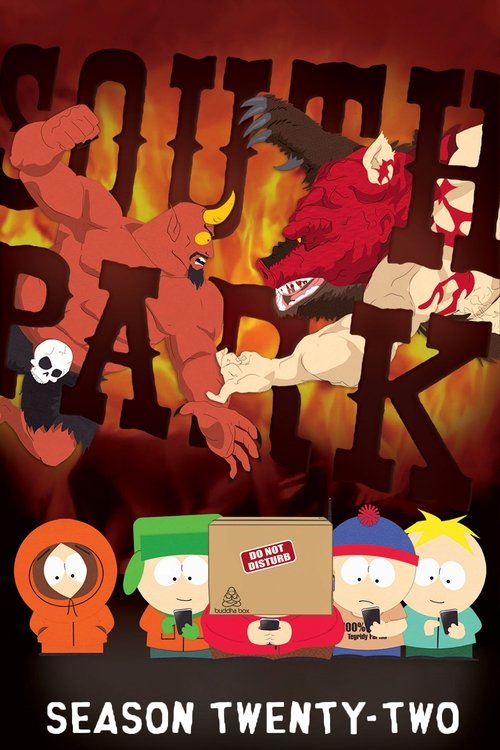
Join Stan, Kyle, Cartman, Kenny as they deal the vaping epidemic, Cartman’s anxiety disorder, and the fact that they didn't take the threat of ManBearPig "cereal" enough the first time around. For them, it’s all part of growing up in South Park!
Season Review
Categorical Breakdown
The narrative satirizes the modern culture of victimhood and self-diagnosis in the episode 'Buddha Box,' where Cartman uses his 'anxiety' diagnosis as an excuse to be rude and isolate himself, a direct critique of weaponizing identity for personal gain. The season focuses on satirizing 'political correctness' rather than adopting the intersectional lens. No characters' plotlines are driven by an identity-based struggle for systemic power, keeping the score low.
The 'ManBearPig' arc is a commentary on societal denial of climate change and the willingness of a community to pawn off an existential problem onto the next generation for the sake of their modern, materialistic lifestyle. This frames the contemporary American consumerist culture as fundamentally flawed and self-destructive for the future, which is a critique of civilizational short-sightedness and lack of responsibility. However, the show does not demonize the country’s entire heritage or elevate an 'alien' culture, placing it at a mid-level score.
The episode on school shootings portrays Stan’s mother, Sharon Marsh, as the only adult genuinely distraught by the violence, while the town, including her husband Randy, dismisses her anxiety as being due to her menstrual cycle. This frames the white male figures as either incompetent or desensitized buffoons who dismiss genuine female distress through a sexist trope. However, the season also continues the story of Strong Woman (PC Principal's partner) in her role as a professional and a mother of quintuplets, which complicates a pure 'anti-natalism' reading, resulting in a mid-low score.
The core plotlines for the season do not center on alternative sexualities, gender identity, or queer theory. The recurring presence of PC Principal maintains a background theme of political correctness but is not the main focus. The controversial 'trans athlete' satire that would drastically raise this score is reserved for the next season, keeping the focus on normative structures as the standard default for this specific season.
The show maintains its long-standing approach of equal-opportunity offense toward all organized religion, including lampooning the Catholic Church's child abuse scandal in one episode and the literal portrayal of Satan as a character that appears to assist the boys. This consistent depiction of religious figures, dogma, and institutions as flawed, absurd, or even the root of social problems strongly aligns with the 'Traditional religion is the root of evil' definition, resulting in a very high score.