South Park
Season 12 Analysis
Season Overview
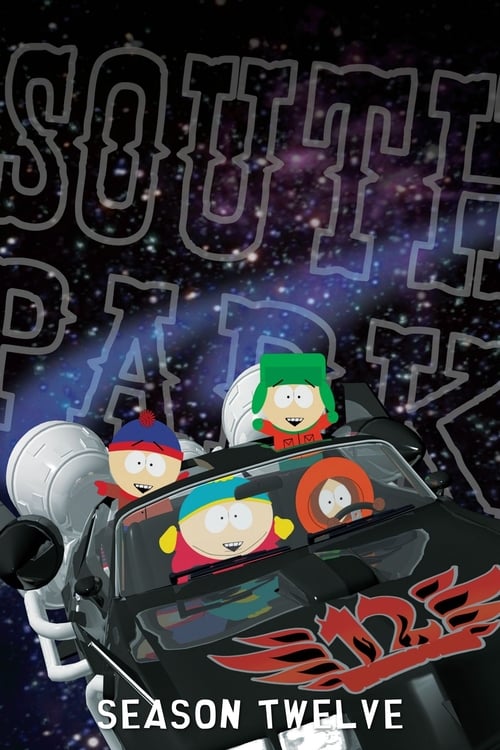
Join Stan, Kyle, Cartman and Kenny as they help a pop-princess down on her luck, negotiate a truce for striking Canadians, fight the addiction of "cheesing" and battle startling rodents. For them, it's all part of growing up in South Park
Season Review
Categorical Breakdown
The narrative does not rely on race or intersectional hierarchy. The 'Tonsil Trouble' plot, where Cartman contracts and transmits HIV, uses a marginalized disease for crude humor and satire, but it does not frame the characters as victims of systemic oppression based on their identity. The characters, regardless of race or background, are judged solely on their merit as either decent children (Stan, Kyle) or as morally bankrupt schemers (Cartman). Diversity is a natural part of the town's existing cast and is not a forced insertion for political lecturing.
The season critiques aspects of modern American culture, such as internet addiction ('Over Logging') and the media's obsession with celebrity ritual ('Britney's New Look'). 'The China Probrem' episode directly satirizes Hollywood's pandering to the Chinese market, which is a critique of corporate American compromise, not a demonization of American civilization itself. 'Canada on Strike' mocks the absurdity of an entitled Canadian strike, which frames American institutions as the default and Canada as the demanding 'other.' The satire is on contemporary American failures, a classic 'Chesterton's Fence' view of correcting internal issues rather than tearing down the foundation.
The score is a moderate 4 due to the 'Breast Cancer Show Ever' episode. Wendy Testaburger challenges Cartman to a fight after he makes light of breast cancer, and she systematically and violently beats him up. This narrative positions Wendy as a powerful, hyper-competent 'Girl Boss' figure against an emasculated male bully (Cartman). However, it stops short of a 10/10 score because the episode focuses on the destructive nature of Cartman's provocation and the incompetence of the male administration (Principal Victoria is the only reasonable adult), avoiding overt anti-natalism or treating all men as bumbling idiots.
The primary storyline in 'Eek, A Penis!' involves Ms. Garrison reversing her sex-change operation to become Mr. Garrison again. This is a direct parody that treats gender and sexual identity as chaotic, self-centered, and medically absurd personal choices, rather than a sacred or politically-centered identity. The show does not center alternative sexualities or frame the nuclear family as oppressive. The joke is on the character's internal confusion and societal fads, which runs directly counter to the 'Queer Theory Lens' definition.
The season engages in standard *South Park* anti-establishment irreverence, particularly toward media-fueled cultural fads. 'Britney's New Look' uses a human sacrifice ritual to satirize celebrity worship, symbolically targeting the media/societal 'gods' rather than explicitly organized religion. The anti-religious content is less pronounced than in other seasons, focusing instead on secular moral relativism and the spiritual vacuum of pop culture ('The Ungroundable' mocks the *Twilight* fad). The narrative does not explicitly paint Christian characters as villains, but maintains a general anti-authority and anti-organized religion stance.