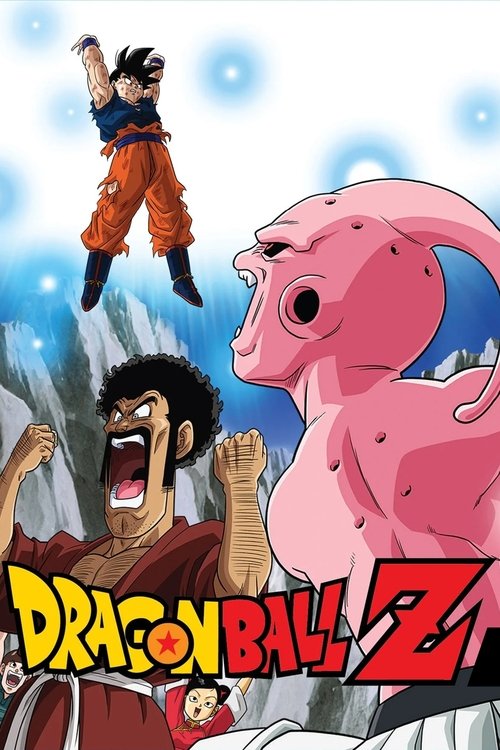
Dragon Ball Z
Season 9 Analysis
Season Overview
Majin Buu's rampage continues, and the only hope of defeating this terrifying foe is the Fusion Technique. For this desperate plan to succeed, two fierce rivals, Goku and Vegeta, must combine their powers in a heroic attempt to stop Majin Buu once and for all!
Season Review
Categorical Breakdown
The narrative is purely meritocratic; characters' effectiveness is determined by their power level and skill, not by race or immutable characteristics. The Saiyans, Namekians, and Humans unite to fight a singular evil, and their ability to save the world is entirely dependent on training and raw power. There is no vilification of any group based on intersectional identity or lecturing on privilege.
The central drive of the entire arc is the defense of Earth and its inhabitants, positioning home and civilization as a vital good that must be protected from an alien destroyer. The protagonists, including the alien Saiyans, are completely integrated and motivated by love for their adopted world. There is no suggestion of civilizational self-hatred or a 'Noble Savage' trope.
Gender roles are largely complementary. Female characters like Chi-Chi and Bulma are strong personalities who manage the domestic life and serve as the emotional anchors of the families. Videl is a strong female fighter who, after marrying Gohan, settles into a domestic and maternal role, a position that is celebrated, not framed as a 'prison.' Men are not emasculated but are defined by their strength, protectiveness, and martial prowess. The score is only slightly above the lowest due to the women having largely supportive rather than front-line combat roles in this specific part of the story.
The season adheres strictly to a normative structure. All prominent romantic relationships (Goku/Chi-Chi, Vegeta/Bulma, Gohan/Videl, Krillin/Android 18) are traditional male-female pairings that produce nuclear families, which are depicted as the foundation for the heroes' motivation. Sexuality is not a topic of discussion or a central identity trait, and there is no presence of gender theory.
The story is fundamentally rooted in a transcendent morality of good versus evil. Powerful, literal gods (the Supreme Kai, Elder Kai) are active, flawed but benevolent characters whose intervention and spiritual power are essential to the plot. The final attack, the Spirit Bomb, relies on the collective pure-hearted energy of all living things, explicitly acknowledging a higher moral and spiritual law. The score is low because the divine is respected, not rejected.