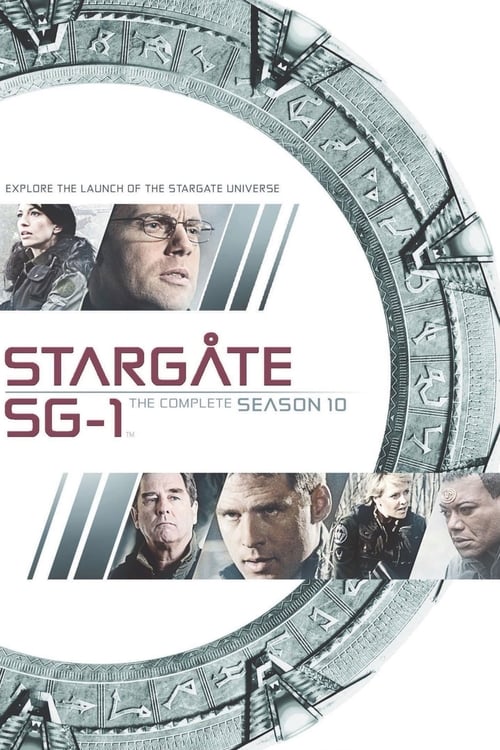
Stargate SG-1
Season 10 Analysis
Season Overview
As the team embarks upon its tenth year, Vala, a former Goa'uld host turned freedom-fighter, joins SG-1 in their battle to defend the galaxy from the holy war of the Ori. Having discovered the existence of a weapon capable of defeating the Ori, the team is now in a race against time to find it before more systems fall to the influence of the Priors and the threat of the newly arrived Origin fleet. The season is continued with direct-to-DVD film Stargate: The Ark of Truth.
Season Review
Categorical Breakdown
The team composition adheres to the long-standing structure of the military organization, where character function and merit determine roles. The conflict is existential, not focused on internal Earth-based racial or political issues. The sole non-white main character is an alien from a different culture, and the plot does not include lectures on white privilege or systemic oppression.
The central plot is the defense of Earth and the free peoples of the Milky Way from an invading alien force. The military and scientific institutions of Earth, the Stargate Command and US Air Force, are consistently portrayed as the heroic, rational shield against chaos. The narrative operates from a position of profound civic and civilizational defense, showing clear gratitude for the established home culture.
Two female characters, Colonel Carter and Vala Mal Doran, are strong, central leads. Carter's authority is based on her established genius and military rank, not an instant 'Girl Boss' trope. Vala is a complex, morally ambiguous character who finds redemption through competence. Male leads remain capable and heroic, precluding any narrative-wide emasculation. The theme of motherhood appears only in the form of Vala’s forced, antagonistic pregnancy with the villain Adria.
The season contains no overt LGBTQ+ representation, centering, or discussion of sexual ideology. The standard relationship structure presented for the main characters remains within the traditional male-female pairing. Sexuality is treated as a private matter or a source of interpersonal tension (as with Vala and Daniel) without any accompanying political lecturing on gender theory.
The core antagonist of the season is the Ori, a malevolent race of ascended beings who invented a religion called Origin solely to manipulate and harvest power from their worshipers. This plot functions as a massive, season-long critique of organized faith, depicting religious zealotry as the mechanism for totalitarian control, genocide, and oppression, which must be defeated by secular, rational forces (SG-1 and the Earth military).