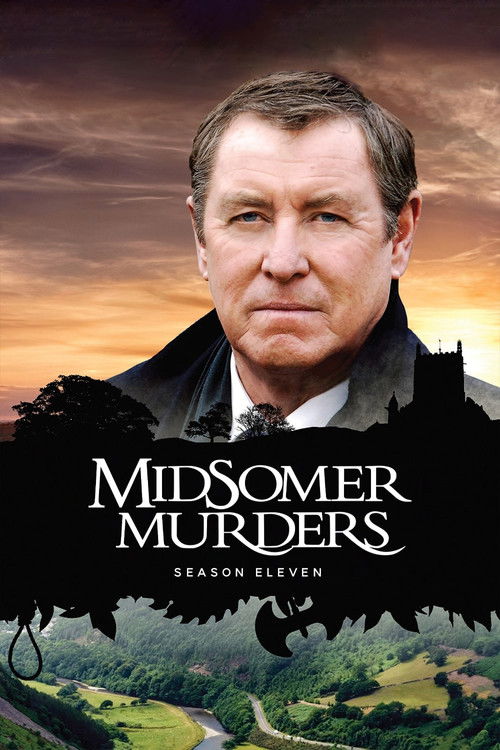
Midsomer Murders
Season 11 Analysis
Season Overview
No specific overview for this season.
Season Review
Categorical Breakdown
Characters are universally judged by their individual moral character and actions, often rooted in classic motives like greed, jealousy, and revenge. The core conflict often centers on socioeconomic class and old family prestige versus new money, not on race or intersectional hierarchy. There is no vilification of 'whiteness' or forced insertion of diversity; casting reflects the historically authentic nature of a rural English setting.
The series' fundamental premise involves uncovering murder and corruption *within* established English village institutions and aristocratic families, which critiques local decadence. However, this functions as a dark underbelly to the setting, not a wholesale condemnation of Western or British civilization as 'fundamentally corrupt/racist.' Ancestors are neither demonized nor celebrated, but their historical actions create the problems of the present day.
Female characters are complex, flawed, and often the victims, perpetrators, or masterminds of the crimes. They are motivated by classic tropes such as money, ambition, or love, including a marriage of convenience for financial gain. The primary detective's family life, including his daughter's wedding, provides a positive background of a functional family unit. There is no pervasive 'Girl Boss' trope or consistent emasculation of the male leads, who remain competent professionals.
One episode features a gay male character whose unhappy, fraudulent marriage to a woman is a central plot element within a high-society family drama. His sexuality is treated as a secret and a source of personal misery and family pressure. This inclusion is for dramatic effect and intrigue, not to center sexual identity as the most important trait or to promote an explicit political ideology. The normative nuclear family remains the standard backdrop.
One murder plot centers on a secretive pagan cult (Temple of Thoth), which is depicted as a front for murder and deception, thereby portraying a form of 'faith' as a root of evil. Traditional religion, specifically Christianity, is not explicitly vilified, nor are Christian characters broadly depicted as bigots or villains. The season utilizes esoteric groups as colorful backdrops for crime, placing the morality as subjective and individual, but lacks explicit anti-theist lecturing.