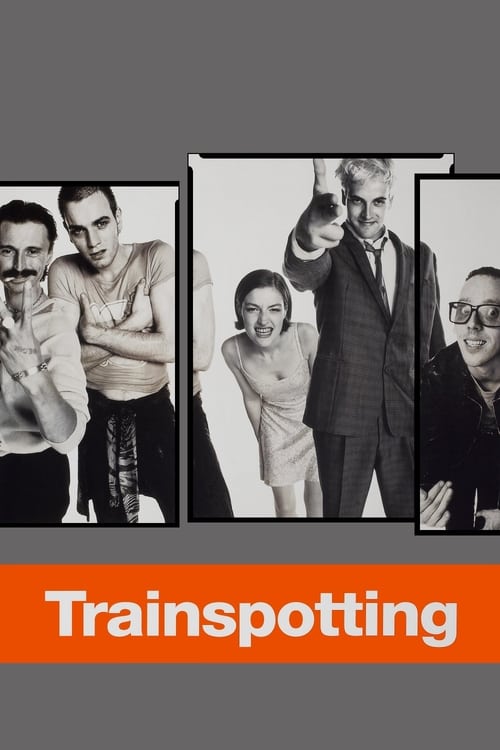
Trainspotting
Plot
Heroin addict Mark Renton stumbles through bad ideas and sobriety attempts with his unreliable friends --Sick Boy, Begbie, Spud and Tommy. He also has an underage girlfriend, Diane, along for the ride. After cleaning up and moving from Edinburgh to London, Mark finds he can't escape the life he left behind as Begbie and Sick Boy come knocking.
Overall Series Review
Categorical Breakdown
The film's focus is on class and economic disenfranchisement in post-Thatcher Britain, specifically the white, working-class poor in Edinburgh. The characters are a marginalized group, but their identity is based on their socioeconomic status and drug use, not on a modern intersectional hierarchy of race or immutable characteristics. There is no vilification of 'whiteness' as an oppressive structure; instead, it critiques a specific cultural and regional decay.
The central 'Choose Life' monologue functions as a comprehensive rejection and hostile deconstruction of modern Western consumerist society, institutions, and cultural heritage, scoring high on civilizational self-hatred. Renton and his friends actively embrace an anti-social, self-destructive lifestyle as a protest against the emptiness of the British status quo. The narrative frames this cultural rejection as a rational, if flawed, response to a fundamentally corrupt system.
Gender dynamics are highly dysfunctional and exploitative. Female characters are rare and often victims of male dysfunction or are manipulative themselves, such as the underage Diane who holds power over Renton. The plot includes a devastating example of anti-natal messaging through the death of a neglected baby, portraying motherhood and family life within this subculture as a site of tragedy and failure. Males are depicted as deeply incompetent, violent, and self-serving, fulfilling the 'toxic male' archetype, though there is no 'Girl Boss' figure.
The narrative makes no attempt to center or lecture on sexual ideology, gender theory, or alternative sexualities. Sexual activity is present but depicted in a raw, often criminal context, focusing on normative male-female pairing without any political framing or deconstruction of the nuclear family as an oppressive structure.
The core conflict revolves around a profound moral relativism and spiritual vacuum, which is what drives the characters to heroin. Heroin is explicitly framed as a superior alternative to 'life' and its prescribed morality. While there is no direct attack on organized religion (Christianity is mostly absent), the worldview is defined by nihilism, the rejection of objective truth, and the embrace of a self-serving, subjective morality. Renton's final 'choice of life' is a turn toward the consumerist system, not a turn toward faith or transcendent morality.