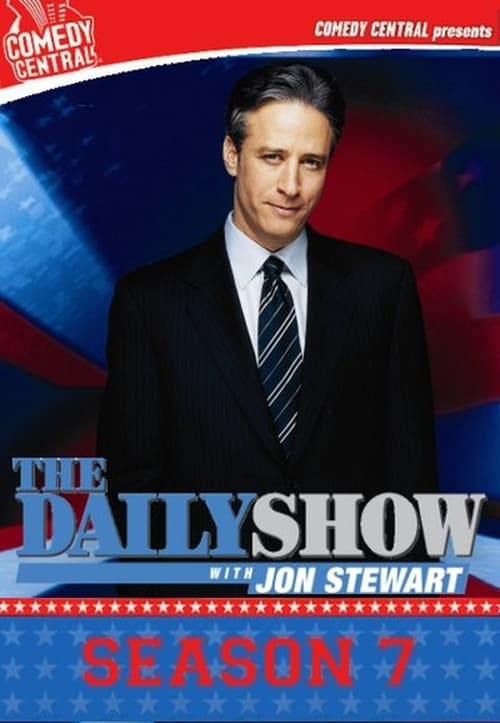
The Daily Show
Season 7 Analysis
Season Overview
No specific overview for this season.
Season Review
Categorical Breakdown
The narrative does not heavily rely on race or an intersectional hierarchy, but it satirizes politicians and media figures, who are predominantly white males, as incompetent or dishonest, aligning with the negative end of the scale for male depiction. The satire's main target is incompetence and dishonesty in high office, not 'whiteness' as a cultural flaw, keeping the score moderate-high. The early 2000s political climate meant the overt focus on race-based 'systemic oppression' was present, but not the dominant, all-consuming narrative of later decades.
The show is fiercely critical of the US government's foreign policy (especially the Iraq War) and corporate scandals like Enron, framing American leadership and institutions as dangerously corrupt and misleading the public. This extensive and unrelenting critique represents a hostility toward the actions and policies of 'one's own home's' institutions. The satire consistently argues for a fundamental break from the current system but focuses on political figures, not the abstract 'ancestors' or 'civilization' itself, which places it at the mid-to-high point on the self-hatred scale.
Gender roles are not a primary topic, but the show's progressive stance results in mocking politicians who oppose women's rights issues. The program did not yet consistently feature the 'Girl Boss' perfection trope, however, the show's internal environment was later criticized for a lack of female writers and a male-dominated atmosphere, despite its outwardly progressive commentary. Jokes targeting women's rights opponents implicitly frame traditional masculinity, especially political masculinity, as problematic or absurd.
The show is a strong and consistent proponent of gay rights and actively ridicules figures who hold anti-gay views, framing them as bigoted or buffoonish. The recurring segment 'Out at the Movies,' hosted by a flamboyantly homosexual critic, places a spotlight on alternative sexuality as a cultural viewpoint and centers a non-normative sexual identity. This level of active political and social support for alternative sexualities, primarily focused on gay and lesbian issues of the era, scores highly, though it precedes the widespread focus on gender ideology (trans topics).
The program regularly directs satire and mockery at the Religious Right and the intersection of Christianity and politics, framing Christian political figures as hypocritical or irrational. Jon Stewart's general worldview is secular and cynical regarding traditional religion, seeing faith as a source of conflict. The score is high because it consistently mocks traditional religion's role in public life while embracing an implicit, subjective moral relativism, though it rarely attacks 'God' or 'belief' directly, preferring to target the powerful people who claim to represent it.