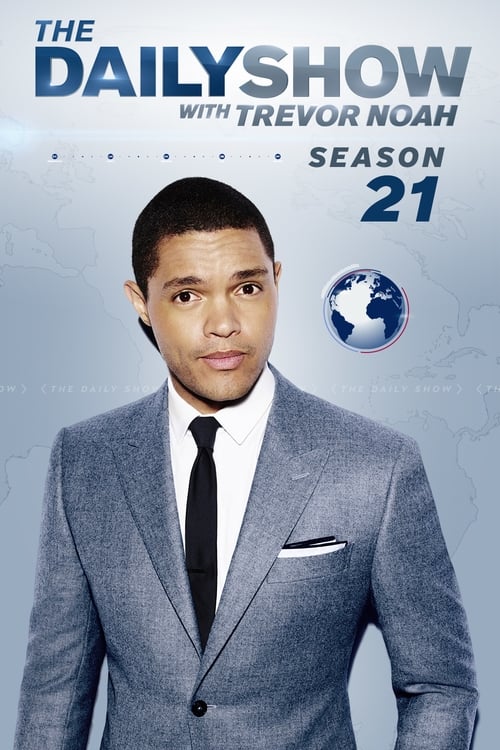
The Daily Show
Season 21 Analysis
Season Overview
No specific overview for this season.
Season Review
Categorical Breakdown
The entire political and cultural analysis relies on race, gender, and immutable characteristics. The narrative frames national events as systemic oppression against specific identity classes like Black people, Muslims, and immigrants. Host Trevor Noah's comedic style and the show's mission actively center racial dynamics and minority perspectives. The show's political commentary frequently addresses the opposition by focusing on 'white identity' as a major, negative political force.
The show presents an intensely critical view of contemporary US institutions and political culture. The American 'social contract' is framed as being 'broken,' especially for minority populations. The political establishment is consistently lampooned for its mendacity, idiocy, and hypocrisy, suggesting a fundamentally flawed or corrupt home system needing profound repair. National culture is deconstructed to emphasize its historical and ongoing systemic failures regarding race and equity.
The political analysis consistently adopts a feminist framework, explicitly listing women as a group that suffered in the 2016 political climate. The show critiques the 'patriarchal impulses' and traditional masculine presentation that attracts voters to conservative figures, effectively framing masculinity as a regressive political force. The narrative champions the progressive female political agenda.
The show explicitly identifies the 'transgender community' as a specifically victimized group in the political environment of 2016, listing them as one of the communities that had a 'pretty bad' year. This inclusion centers a non-normative sexual/gender identity as a key element of the political oppression narrative, using the political failures of the year to highlight the struggles of sexual minorities.
The satire is primarily focused on contemporary politics and media. Religious rhetoric is targeted when co-opted by conservative political figures for hypocritical or exclusionary purposes. The show critiques the political manifestations of faith-based movements but does not devote substantial material to attacking the abstract tenets of traditional religion or objective morality itself.