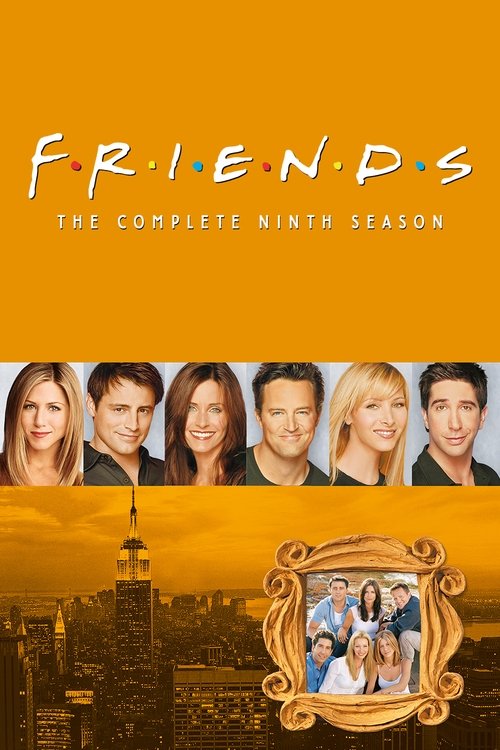
Friends
Season 9 Analysis
Season Overview
No specific overview for this season.
Season Review
Categorical Breakdown
The main cast remains entirely white, but a Black recurring character, Charlie Wheeler, is introduced as a major love interest, adding diversity to the principal pairings. The character's professional success as a brilliant paleontologist is merit-based. The narrative contains no themes of systemic oppression or vilification of white characters based on their immutable characteristics.
The series is a celebration of the characters' urban, Western life, centered on friendship and family formation in New York City. Institutions like marriage and family are treated seriously, despite the comic complications of divorce and infertility. There is no content that frames the home culture as fundamentally corrupt, and the sacrifices of ancestors or national heritage are not discussed or deconstructed.
Monica's career as a head chef is prioritized over her husband Chandler's job, forcing him to quit and pursue a new path, aligning with a 'Girl Boss' power dynamic. Chandler's character is often depicted as insecure or bumbling, slightly emasculating him relative to his wife. However, the primary focus for Monica and Chandler is the desire to start a family, actively seeking fertility treatments and adoption, which counteracts anti-natalist messaging.
Alternative sexualities appear in minor, matter-of-fact ways. A nanny hired by Ross and Rachel is casually identified as a lesbian. The episode featuring a male nanny, Sandy, whom Ross fires for being too sensitive and 'feminine,' critiques traditional gender role rigidity, slightly pushing the needle on gender ideology without centering it. The family unit and male-female pairing remain the normative structure of the show.
The show operates in a completely secular vacuum where traditional religion is entirely absent. Morality is entirely subjective and situational, determined by the characters' immediate wants and needs. The absence of traditional faith and reliance on secular/relativistic ethics places the content far from 'Transcendent Morality,' though there is no active vilification of religious figures or Christianity.