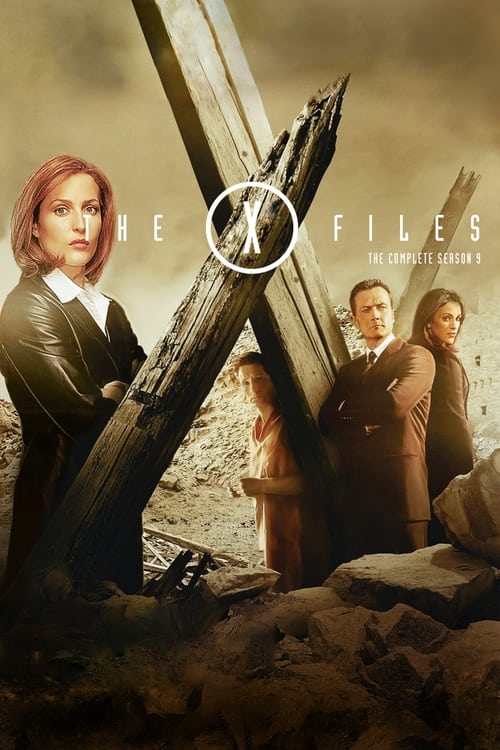
The X-Files
Season 9 Analysis
Season Overview
Aware his presence only puts Scully and William in jeopardy Mulder once again disappears — but at least this time it is his own choice. A frustrated Agent Doggett tries to find Mulder so he can proceed with his investigation against Deputy Director Kersh, but Scully and Skinner finally convince him to drop his case. Yet even as Scully helps Agent Doggett and Agent Reyes on some of their cases she realizes William is still in danger. When she learns a religious cult wants her son dead she turns to the Lone Gunmen. But even they cannot prevent William from being kidnapped, a fact which forces Scully to make a painful decision. Yet even in her darkest hour she receives word that Mulder has been found — and is being held in a military brig for the murder of a man who cannot die.
Season Review
Categorical Breakdown
Characters are overwhelmingly judged by their actions and competence as FBI agents or villains, not by race or immutable characteristics. Agent Monica Reyes, the new female co-lead, adds diversity to the main cast but her character arc and investigations do not involve any lectures on privilege or systemic oppression based on her background. The main villains are the established, predominantly white-male members of the government conspiracy and Super Soldiers; this is a continuation of the show's long-running plot and is based on their institutional corruption, not on their whiteness.
The show is built on a fundamental distrust of centralized power, constantly framing the U.S. government, military, and its secret officials as manipulative villains engaged in a conspiracy with alien forces. The narrative positions American institutions as fundamentally corrupt and actively working against its own citizens, which tracks as hostility toward the 'home' civilization. The deconstruction of heritage focuses specifically on a secret cabal within the government, not a broad demonization of all ancestors or Western culture itself.
The main female character, Scully, is a highly educated medical doctor and FBI agent. Her entire arc in this season centers on her role as a protective mother, desperately trying to keep her son, William, safe from multiple threats. This plot strongly emphasizes motherhood and family ties. Some episodes depict Scully as being emotionally vulnerable and making poor judgments due to her singular focus on her child and her absent male partner, which actively undermines the 'Girl Boss' trope that demands perfection and emotional detachment. Reyes is a competent co-lead but is not presented as a Mary Sue.
The core of the season's personal drama is centered entirely on the traditional nuclear unit (Scully/Mulder/William) and the development of a heterosexual pairing between Agent Doggett and Agent Reyes. The show contains no narrative focus on alternative sexualities, sexual identity as a primary trait, or any lecturing on gender ideology. Sexuality and gender adhere strictly to a normative structure without being a thematic point of discussion or conflict.
Religion is not the central target of the season's critique. A 'religious cult' actively seeks to harm William, framing a specific fringe religious group as malevolent. However, the season also includes an episode ('Improbable') that is notably sympathetic to the idea of a transcendent moral order and features a character heavily implied to be a benevolent God figure guiding the agents. The show maintains its overarching theme of subjective belief (Mulder/Reyes) versus scientific skepticism (Scully/Doggett) rather than a direct, generalized attack on traditional faith.