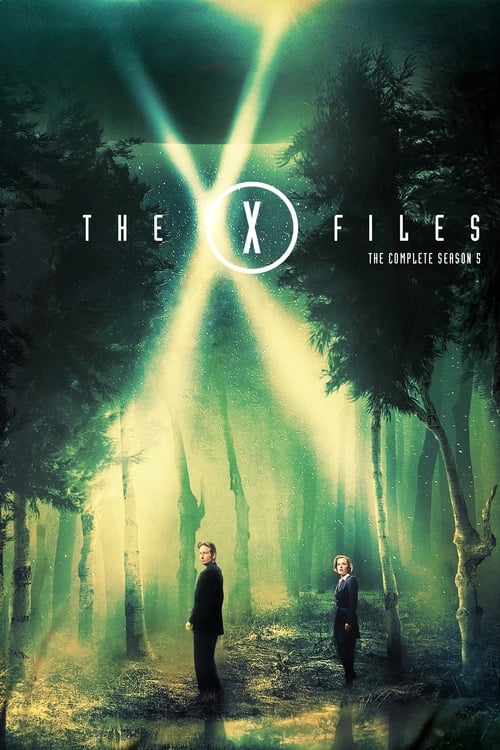
The X-Files
Season 5 Analysis
Season Overview
Even as Scully’s genetically altered DNA brings her closer to the brink of death, government agent Michael Kritschgau helps Mulder in the search for a cure, partly to atone for his own involvement with perpetrating the alien hoax. Scully’s DNA comes into play once again when she discovers she is the mother of a little girl named Emily, an incident that could only be related to her abduction years earlier. But in the end it is a young boy named Gibson Praise whose body may contain genetic proof of man’s relationship to an alien race — and who may hold the key to unlocking the mysteries of the X-Files.
Season Review
Categorical Breakdown
Characters are judged solely on their professional competence, moral alignment, or their role in the conspiracy, reflecting a universal meritocracy. Race and immutable characteristics are not a factor in the narrative's central conflicts or power dynamics. Forced diversity and vilification of 'whiteness' are absent from the season's focus.
The season's primary antagonist is the secret cabal within the United States Government (The Syndicate), which fosters an institutional self-hatred specific to the 'deep state.' The narrative does not demonize American culture, heritage, or ancestors broadly, but rather portrays the Federal establishment as a corrupt shield used to control and betray the populace. The alien force is a hostile, external threat, not a 'Noble Savage' alternative.
Dana Scully is an iconic, competent, skeptical scientist and FBI agent who partners with a male counterpart based on mutual respect and distinct skills. She is a fully developed character whose arc in this season focuses on her health crisis and the tragic consequences of her unexplained motherhood, which relates to her abduction. The complex arc of an abducted woman becoming a mother works against a simple anti-natalist or 'Motherhood is a prison' message. The male co-lead, Mulder, is not consistently emasculated or portrayed as a bumbling idiot.
The season focuses on traditional supernatural and conspiracy plots. Sexual identity is entirely private and non-ideological, serving no role in the primary or secondary plots. The central partnership is a normative male-female pairing, and the narrative does not feature any deconstruction of the nuclear family or instruction on gender theory.
The score reflects the ongoing tension between Scully's devout Roman Catholic faith and the secular, scientific skepticism of Mulder, which presents a mixed spiritual view. While some episodes feature organized religion in a negative light (e.g., cults, or Mulder linking acts to insanity), Scully's faith, symbolized by her cross and her search for meaning, is consistently portrayed as a source of personal strength and moral anchor, directly challenging a complete 'spiritual vacuum' or framing of all traditional religion as evil. An episode (All Souls) shows Scully correcting a secular, anti-religious interpretation of a Catholic symbol, elevating transcendent morality over a simple critique of the Church.