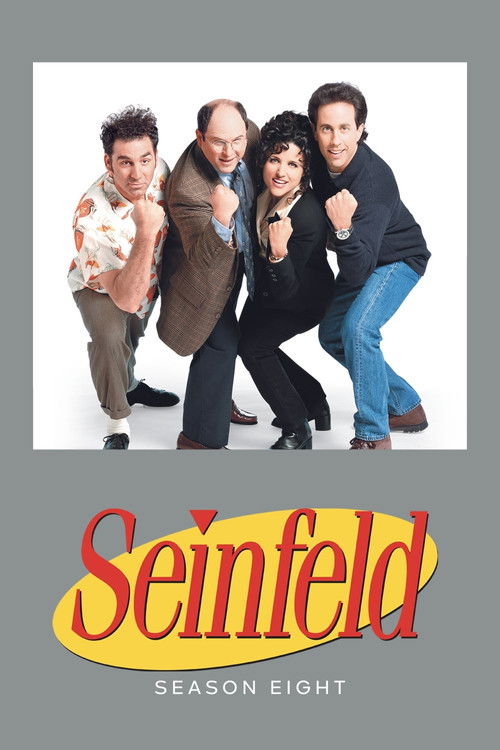
Seinfeld
Season 8 Analysis
Season Overview
No specific overview for this season.
Season Review
Categorical Breakdown
The plot and characters do not rely on an intersectional lens; the main conflict stems from the individual neuroses and amoral actions of four white protagonists. Character flaws, not immutable characteristics, drive the story. White males are depicted as incompetent, but the white female lead is equally narcissistic and flawed, demonstrating equal-opportunity comic vilification.
The narrative does not frame Western civilization as fundamentally corrupt or evil. The focus is a highly localized satire of modern urban social conventions. Institutions like the charitable foundation are not demonized in principle, but rather through the venal, self-serving actions of George Costanza, who attempts to corrupt them for personal gain.
Elaine Benes maintains her status as a career-focused, independent woman who is briefly promoted to a powerful 'Girl Boss' position. However, she is just as fundamentally flawed and self-sabotaging as the men. She expresses a clear anti-natalist viewpoint by actively deciding against having children and seeking relationships with men who feel the same way.
The main cast is exclusively heterosexual, and the show focuses only on normative dating rituals, which are mocked for their superficiality. The comedy does not center on alternative sexualities, nor does it attempt to deconstruct the nuclear family structure through a political lens. Sexuality remains a private matter confined to the characters' personal, messy dating lives.
The core four characters are fundamentally amoral, narcissistic, and driven only by self-interest, which creates a world where morality is subjective and transcendent moral law is ignored. The show lives in a spiritual vacuum but rarely engages in direct hostility toward specific faiths. Religion is treated as another source of social awkwardness or misunderstanding, such as in 'The Yada Yada'.