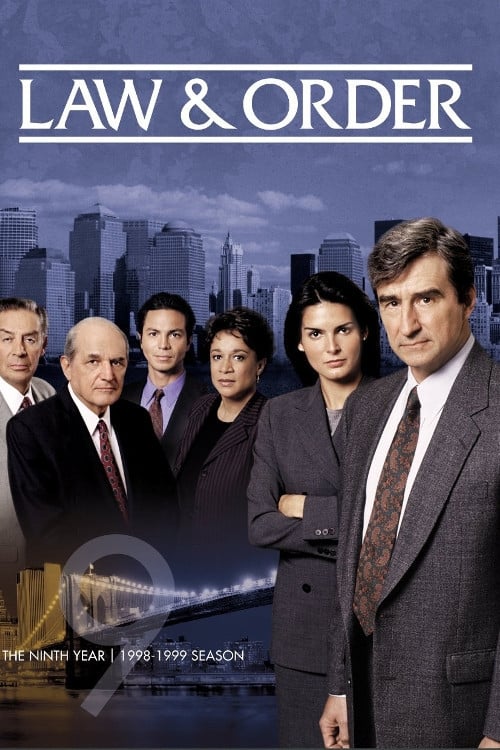
Law & Order
Season 9 Analysis
Season Overview
No specific overview for this season.
Season Review
Categorical Breakdown
The season directly tackles race and social conflict by featuring "ripped from the headlines" plots with titles like "DWB" (Driving While Black) and cases centered on affirmative action, making immutable characteristics a major narrative device. The narrative structure is one of presenting a societal conflict for the justice system to resolve, not one that portrays white males as inherently incompetent or evil. The core cast is merit-driven and racially diverse.
The show is structurally institutionalist, with the entire premise revolving around the successful, though sometimes flawed, functioning of the Police Department and District Attorney’s office. The institutions of the justice system are constantly validated as necessary shields against chaos, and there is a consistent affirmation of the American legal framework.
Female leads, Lieutenant Van Buren and ADA Abbie Carmichael, are portrayed as competent professionals who are successful without emasculating their male colleagues, such as McCoy and Briscoe. The central male character, Detective Curtis, leaves the force at the end of the season to care for his sick wife, which serves as a powerful affirmation of family and caregiving over a career focus.
The season contains no explicit focus on alternative sexualities, gender ideology, or the deconstruction of the nuclear family. The default structure is the normative male-female pairing, and the topic of sexual identity is private or non-existent within the main conflict narratives.
The show's pursuit of justice operates as a secular morality play that affirms the existence of an objective truth found in the law. It does not feature antagonism toward traditional religion, and a main character, Detective Curtis, is noted as being a conservative Catholic without his faith being characterized as a source of bigotry or evil.