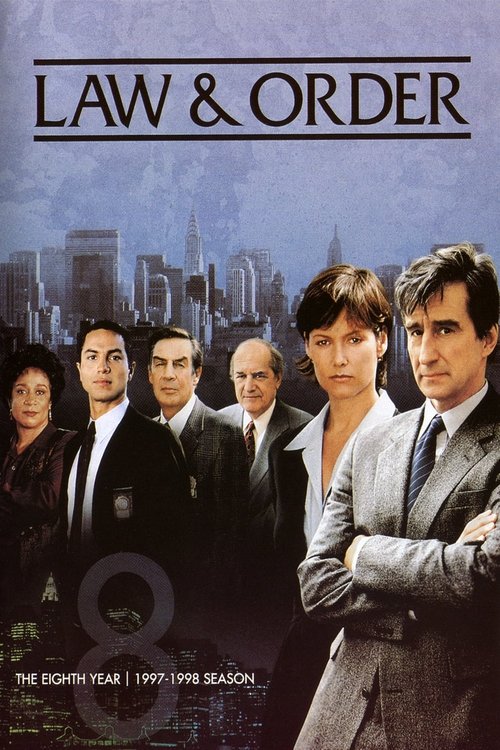
Law & Order
Season 8 Analysis
Season Overview
No specific overview for this season.
Season Review
Categorical Breakdown
The main cast features racial and gender diversity as a reflection of New York City's police and legal system, not as a source of narrative lecturing on systemic oppression. One plot involves a man who had passed as white, using race as a personal secret that leads to a crime, but the case is focused on murder and deception, not the vilification of whiteness.
The central theme of the series is the rigorous enforcement and defense of the American legal system and its institutions. An episode concerning a domestic militia group that seeks to overthrow the U.S. government is resolved by prosecuting the group as criminals and terrorists, framing the government as the necessary force of order and stability.
The female leads, Lieutenant Van Buren and ADA Jamie Ross, are portrayed as highly competent professionals, but the narrative avoids the 'Girl Boss' trope. The season finale culminates in Jamie Ross choosing to leave her elite prosecutor role to prioritize her child's well-being and custody battle, directly contrasting the modern anti-natalist and career-over-all-else feminist message.
The season contains no plot lines dedicated to celebrating alternative sexual identities, centering queer theory, or deconstructing the nuclear family. Sexuality is handled as a private matter or as a context for criminal pathology, such as a case dealing with an HIV-positive man knowingly infecting partners.
Religion is not demonized and is treated as a neutral catalyst for crime, such as a murder connected to a Catholic annulment case. One episode involves a killer who converts to 'born again' Christianity and asks to stop her appeals, but this frames faith as a source of personal conviction for the individual, not a symbol of evil or bigotry for the institution of Christianity itself. The legal focus is on Objective Truth.