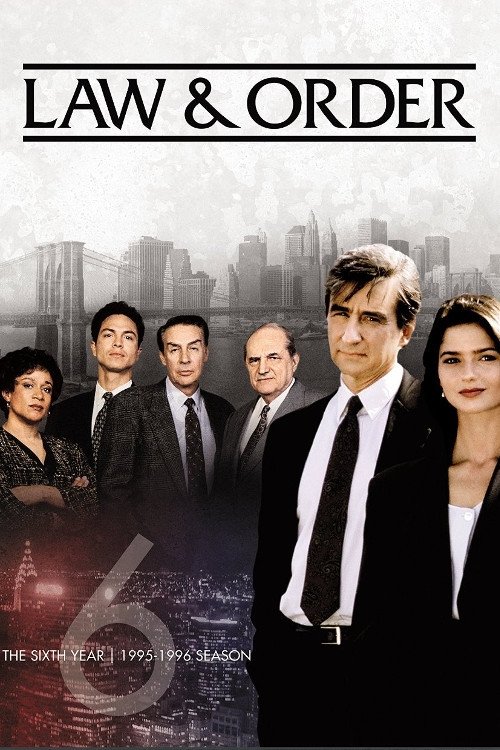
Law & Order
Season 6 Analysis
Season Overview
No specific overview for this season.
Season Review
Categorical Breakdown
The season directly addresses race and immutable characteristics in key episodes, such as a custody battle involving a biological mother who argues for a right to reclaim her African-American son adopted by a white family. Hate crimes and anti-Semitism are also central plot points. The show explores these conflicts but does not frame the narrative around the vilification of whiteness or a contemporary systemic oppression lecture; instead, it uses race as a source of complex legal and moral debate.
The show is explicitly structured around upholding the American legal and criminal justice system. Institutions like the police and the District Attorney’s office are generally viewed as a defense against chaos and crime. Even when characters face moral crises or corrupt judges are exposed, the underlying narrative respects the fundamental legitimacy and necessity of Western legal tradition and its institutions.
The main female characters, Lieutenant Van Buren and ADA Kincaid, are portrayed as highly competent, professional, and authoritative in their respective fields. Kincaid, in particular, is a strong legal mind working as an equal to McCoy. Characters are defined by their capability and work ethic, and there is no pattern of depicting male colleagues as bumbling or toxic in a way that aligns with the modern 'Girl Boss' trope.
One episode focuses on the murder of a gay man and a possible motive related to workplace discrimination. This engagement is a reflection of a contemporary social issue of the 1990s and is treated as a crime with a specific motive, not an attempt to center alternative sexualities or deconstruct the nuclear family. The default structure of relationships and family is traditional, without any lecturing on gender theory.
Religion is seldom a central theme, appearing only as a secondary context, such as a character confessing a crime in her church. The legal focus is on Objective Truth—the facts of the crime and the law—rather than moral relativism. The show does not portray traditional religion, especially Christianity, as a root of evil or its practitioners as villains or bigots.