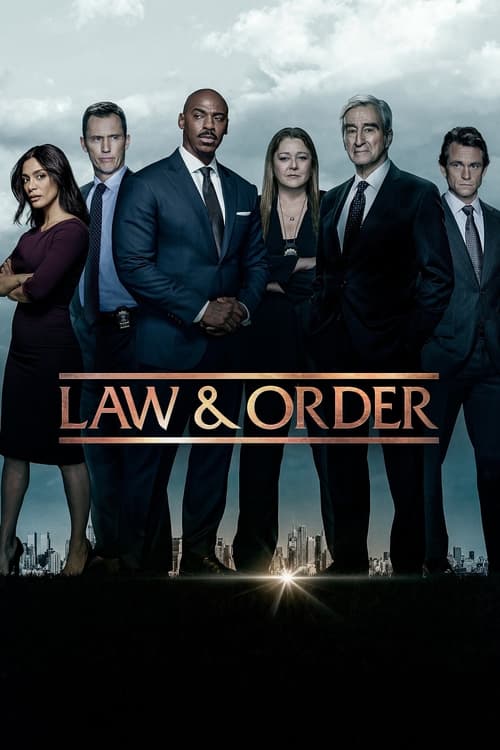
Law & Order
Season 22 Analysis
Season Overview
No specific overview for this season.
Season Review
Categorical Breakdown
The narrative explicitly frames the relationship between the two lead detectives through an intersectional lens; the Black detective is a victim of racial profiling by his own department, and the white detective is shown to have innate biases and 'micro-aggressions' that require correction. Plotlines frequently focus on race-based motivations and systemic oppression within the legal system, suggesting plot points exist primarily to lecture on privilege.
American institutions, particularly law enforcement and conservative political/cultural elements, are subjected to consistent and harsh critique. The police are shown to racially profile their own officers, and conservative figures associated with traditional cultural stances (like anti-abortion or skepticism toward gender ideology) are depicted as violent extremists or murderers, framing traditional American heritage as fundamentally corrupt.
The core female characters hold powerful positions within the justice system. The primary 'woke' marker is an episode centered on the abortion debate, which portrays the 'Pro-Life radical' side as the source of violence and murder, functionally demonizing the pro-natalist position and aligning the narrative with an anti-natalist viewpoint.
One central episode directly focuses on gender ideology and the nuclear family. A doctor who provides a minor with 'puberty blockers' against the parents' will is murdered, and the narrative condemns the father who opposed the transition as a violent extremist. This plot explicitly centers alternative sexualities and frames the defense of biological reality by a parent as a form of bigotry that leads to violence.
Traditional religion-aligned moral positions are explicitly demonized. A character associated with the pro-life movement is portrayed as a political assassin, and the episode on gender ideology portrays the parent defending a traditional view of the family and biological reality as a murderer. The pursuit of justice often relies on subjective legal arguments tied to social justice concepts rather than an objective, transcendent moral law.