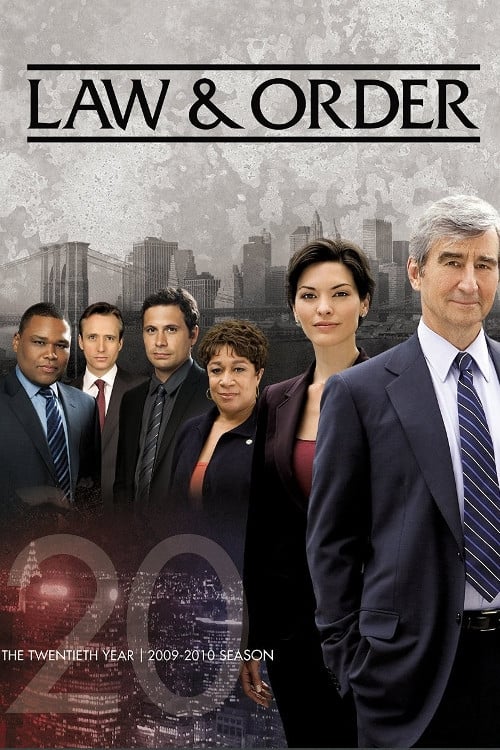
Law & Order
Season 20 Analysis
Season Overview
No specific overview for this season.
Season Review
Categorical Breakdown
Characters are judged by their roles and actions within a crime, not by an intersectional hierarchy. The show examines crimes across all socio-economic and racial groups without a consistent narrative of systemic oppression or white guilt. An episode does feature a political group, a 'libertarian group active in those tea parties,' as part of the criminal investigation, but this centers on ideological conflict rather than immutable characteristics.
The series centers on upholding the integrity of the American criminal justice system, viewing its institutions as necessary to combat chaos and depravity. While police corruption and political malfeasance are often exposed, the fundamental structure of the law-and-order process is respected. An episode featuring a Mexican drug cartel depicts the foreign element as criminal, not as a spiritually superior 'Noble Savage' culture.
Female characters like Lieutenant Van Buren and ADA Rubirosa hold high-powered, competent positions and are respected by their male colleagues. The narrative does not depict male leads as bumbling or toxic. The focus is on professional capability for both men and women, which leans toward 'Girl Boss' representation without the extreme emasculation or 'motherhood is a prison' messaging.
One episode focuses on a murder tied to a blackmail scheme involving a journalist and a talk show host in a lesbian affair. This centers an alternative sexuality in the plot. However, the sexuality is treated as a plot device for blackmail, not as an opportunity for lecturing on queer theory or actively deconstructing the nuclear family, keeping the score moderate.
One plotline involves the murder of a late-term abortion doctor, and the narrative suggests the perpetrator is a religious anti-abortion zealot. This aligns with the trope of portraying religious fundamentalism, specifically a conservative Christian political issue, as a source of violence or crime. The show consistently seeks to uphold an objective truth through secular law, but its primary target is not religion itself, only religious extremism.