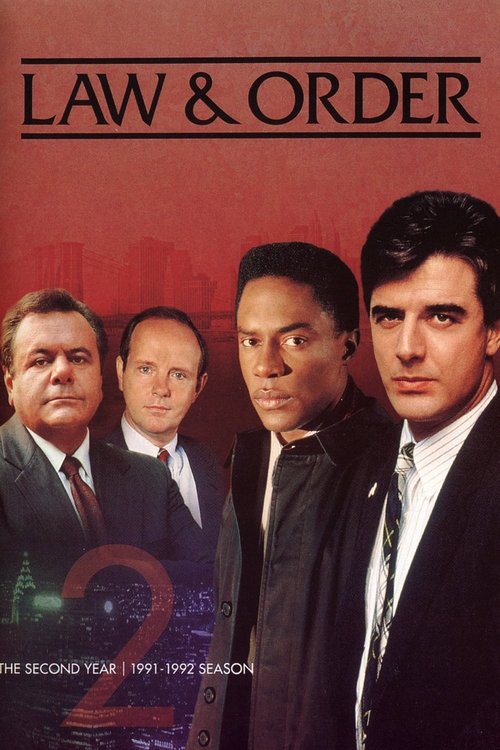
Law & Order
Season 2 Analysis
Season Overview
No specific overview for this season.
Season Review
Categorical Breakdown
Assistant District Attorney Paul Robinette is a Black male who is a competent and equal partner in the prosecution team. The narrative centers on legal procedure and meritocracy. Characters are not defined by immutable characteristics, nor does the plot seek to vilify whiteness or white males. Any issues of race appear as plot points in the context of the crime itself, not as systemic lectures.
The show is explicitly titled "Law & Order." The entire premise is the defense and upholding of American institutional structures (the NYPD and the DA's office) against chaos and criminality. Institutions are affirmed as necessary shields for society. There is no narrative suggesting the home culture is fundamentally corrupt or that ancestors should be demonized.
The main power roles (Detective, Captain, EADA, DA) are predominantly male. Women are included in professional, secondary roles such as the recurring psychologist, Dr. Olivet, and various judges and defense attorneys. The narrative contains no elements of the "Girl Boss" trope, does not present men as bumbling or toxic by default, and does not push anti-natalist messages.
The series, a product of 1990s network television, operates on a normative social structure. Sexual identity is treated as a private matter and does not form an ideological basis for the plot. The narrative avoids centering alternative sexualities or deconstructing the nuclear family as a source of oppression.
The core of the show is the pursuit of objective truth and justice (guilt or innocence), which acknowledges a higher moral law, even if it is secularly defined through the legal system. Traditional religion is not actively vilified. The show is secular in presentation but not defined by moral relativism.