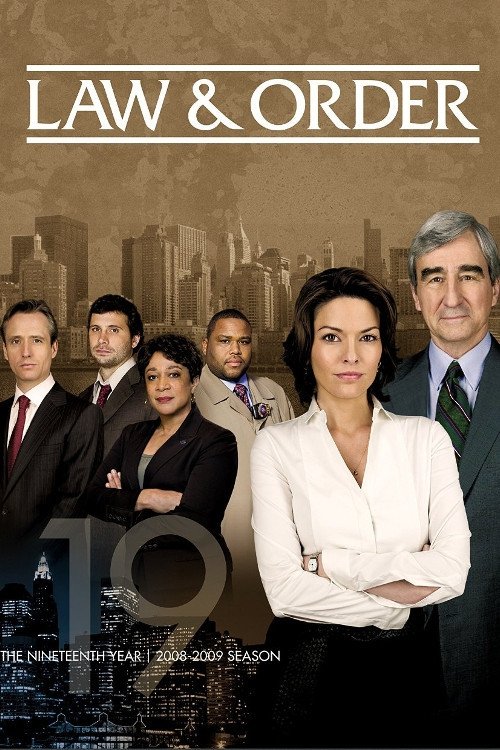
Law & Order
Season 19 Analysis
Season Overview
No specific overview for this season.
Season Review
Categorical Breakdown
Characters, including Detective Bernard and Lieutenant Van Buren, are cast with colorblind professionalism in mind; their race is incidental to their competence and character. The narrative does not utilize an intersectional lens to explain crime or vilify 'whiteness.' Criminals and victims come from all demographics, and justice is pursued based on evidence and legal merit. The plots focus on the breakdown of law and order, not a systemic oppression narrative.
The show critiques corruption within American institutions, such as political establishments and charitable organizations, but this is a critique of moral failing, not a philosophical rejection of Western civilization itself. Institutions like the police, DA's office, and the court system are fundamentally viewed as necessary, functioning structures designed to maintain order, reflecting a baseline respect for the rule of law. The themes are about specific institutional failures, not a deconstruction of heritage.
The female characters, Assistant District Attorney Rubirosa and Lieutenant Van Buren, are portrayed as highly competent, professional, and equal to their male colleagues. The dynamic is one of professional complementarianism, where men and women work together effectively. There is no sustained 'Girl Boss' trope that requires the emasculation of male characters, and no notable anti-natal or anti-family messaging is present within the core narrative.
The season's cases, based on the documented plot summaries, do not center on alternative sexualities, gender ideology, or the deconstruction of the nuclear family. If alternative sexualities appear, they are usually a private detail of a peripheral character's life related to the crime, not the focal point for a social lecture. The show adheres to a normative structure where the traditional family model is the silent societal standard.
As a procedural, the show's moral framework is legal, not religious. Faith and religion are treated as subject matter when relevant to a case, such as an episode involving a corrupt religious website. Religion is occasionally shown to be manipulated for criminal purposes, but the narrative does not target faith itself as 'the root of evil.' It maintains a secular, objective morality based on established law, without lecturing against spiritual belief.