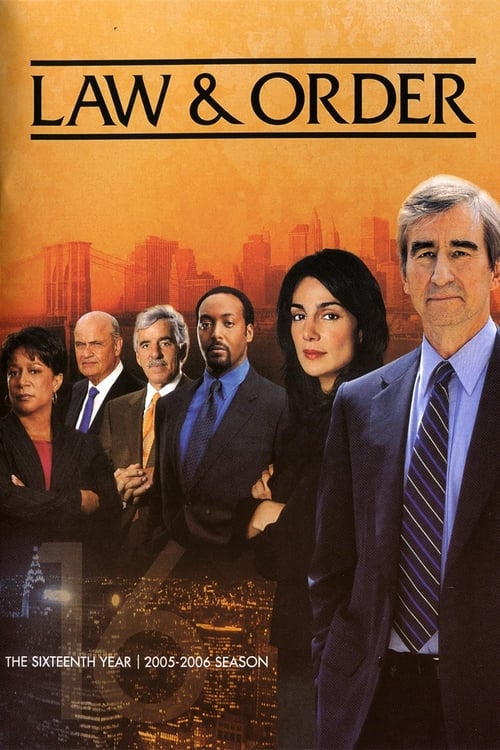
Law & Order
Season 16 Analysis
Season Overview
No specific overview for this season.
Season Review
Categorical Breakdown
The main cast features a diverse team of detectives and lawyers (Black male, Black female, White male, White female), but their race or gender is a secondary characteristic to their professional role and competence. The narrative places character merit and dedication to the law above intersectional identity. While cases may involve race or immigration, the story does not function as a lecture on systemic oppression or privilege, staying focused on the criminal investigation and prosecution.
The show is structurally a celebration of the American criminal justice system, viewing its institutions as necessary for maintaining order and seeking justice. The conflicts arise from internal flaws within the system or external political pressures, not from a fundamental framing of the home culture or its ancestors as inherently corrupt or racist. The setting of New York City's police and court systems is treated with procedural respect.
Female characters like Lieutenant Van Buren and ADA Borgia are depicted as strong, competent professionals who hold positions of authority based on experience and intelligence. Their competence is balanced by equally competent male counterparts, such as Detectives Fontana and Green and EADA McCoy. The show features complex female criminals, including a high-powered executive and a mother, exploring the dark side of female ambition or psychology without simple male emasculation or 'Girl Boss' perfection tropes. Motherhood is addressed in cases involving child-related crimes, but not explicitly framed as a 'prison.'
The season's plot summaries and context from the mid-2000s indicate no significant presence of centering alternative sexualities, deconstructing the nuclear family as a political act, or focusing on gender identity theory. The standard, normative structure of male-female relationships and the traditional family unit remains the backdrop against which crimes are investigated, and sexuality is not a core theme or ideology.
As a morality play, the series acknowledges a higher moral law by consistently exploring objective right and wrong, even when the legal outcome is morally unsatisfying. The narrative's framework is based on transcendent morality where crime is a clear violation. Traditional religion is not overtly demonized or framed as the root of evil; the moral conflict centers on justice, the law, and human fallibility, not on a rejection of faith or an embrace of pure moral relativism as a philosophical tenet.