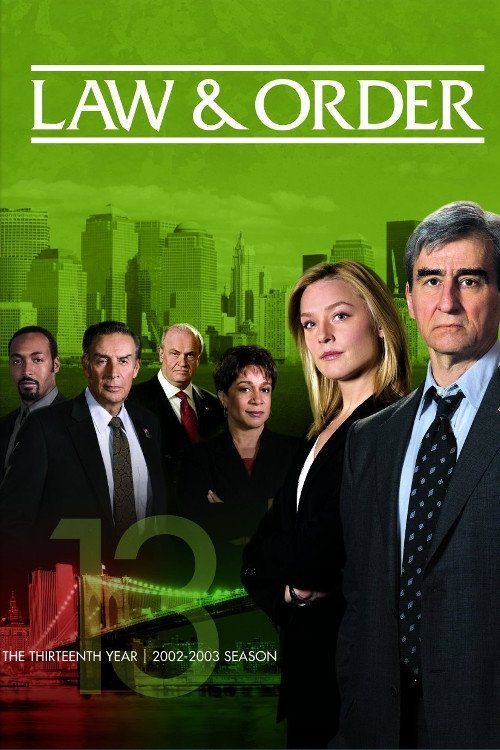
Law & Order
Season 13 Analysis
Season Overview
No specific overview for this season.
Season Review
Categorical Breakdown
The main cast is racially diverse, with a white lead detective, a Black detective, and a Black Lieutenant, but character competence is based on professional skill, not immutable characteristics. A plot involves a white supremacist network and other episodes feature political extremists, but the focus is on their criminal ideology, not the vilification of 'whiteness' as a systemic flaw. The narrative maintains a meritocratic focus where good and evil are found across all groups.
The season premiere, 'American Jihad,' and other episodes deal with post-9/11 issues, framing threats as coming from extremists, both foreign and domestic (like white supremacists), who specifically aim to dismantle the existing legal and social order. The show’s entire premise is the defense and preservation of Western institutions—the police and the courts—which function as the shields against chaos, strongly aligning with the idea of Chesterton's Fence.
Assistant District Attorney Serena Southerlyn and Lieutenant Anita Van Buren are highly competent, high-ranking women in their respective fields, but they are not portrayed as 'Mary Sue' figures. Southerlyn struggles with moral issues like the death penalty. An episode involves a 'staunch feminist' battling a Muslim convert over women's rights, presenting a complicated, non-simplistic conflict over gender roles and culture. The show largely depicts complementarian competence rather than aggressive emasculation.
The plot points contain no overt focus on alternative sexualities, sexual identity as the most important character trait, or the deconstruction of the nuclear family. The narratives follow a normative structure typical of the early 2000s television landscape, where sexuality is private and not the subject of public lecturing or political framing.
One episode features a priest who confesses to murder, claiming divine instruction to kill a drug dealer, which uses religion as a source of delusional violence or excuse for crime. This mildly critiques religion by tying it to a negative outcome. However, the show's overarching theme of 'the Law' inherently acknowledges an Objective Truth and a higher moral order that the characters are sworn to uphold, preventing a complete descent into moral relativism.