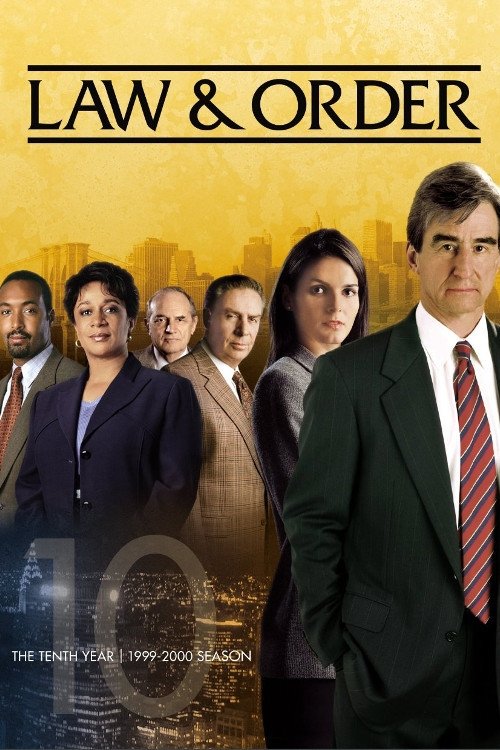
Law & Order
Season 10 Analysis
Season Overview
No specific overview for this season.
Season Review
Categorical Breakdown
The narrative features explicit racial tension between the new partners, Detective Briscoe and Detective Green, where Green suggests Briscoe's age or a 'racial problem' is affecting his judgment; Briscoe strongly denies this, framing the issue as a personal or professional one. An episode where white officers intentionally drop a Black victim in a high-crime neighborhood addresses systemic issues, but this is presented as a central conflict for the characters and courts to resolve, not a wholesale indictment of 'whiteness' or forced diversity. The focus remains primarily on the crime and legal process.
The series focuses on crimes and moral failures *within* the American system, dealing with corruption, gun violence, and social negligence. The justice system itself—the police and prosecutors—are treated as necessary institutions, albeit flawed ones that often struggle with moral compromise. The show does not deconstruct Western heritage or demonize ancestors, instead offering a classic morality play that upholds the rule of law as a vital institution.
Lieutenant Van Buren is an authority figure, and Assistant District Attorney Carmichael is a highly competent, conservative professional who drives the legal half of the show. These women are defined by their professional merit and intelligence, not a 'Girl Boss' trope that requires the emasculation of male colleagues. The male characters, like McCoy and Briscoe, exhibit their own flaws (gambling problem, ethical shortcuts) and strengths. There is no central anti-natal or anti-family messaging.
The season's primary focus is on crime, justice, and the socio-legal issues surrounding the weekly case. There is no evidence of the narrative centering alternative sexualities, deconstructing the nuclear family, or engaging with Queer Theory or gender ideology.
The core of the show, especially in the legal half, revolves around ethical and moral relativism, presenting cases as 'moral mysteries' rather than simply legal puzzles. Jack McCoy is famous for pushing ethical boundaries to get a conviction, which suggests the law itself is the highest moral authority, sometimes overriding objective truth. However, the show does not actively vilify traditional religion or Christian characters; it simply operates in a largely secular, legal world where faith is not typically a source of strength or a root of evil. The morality is procedural and humanistic.