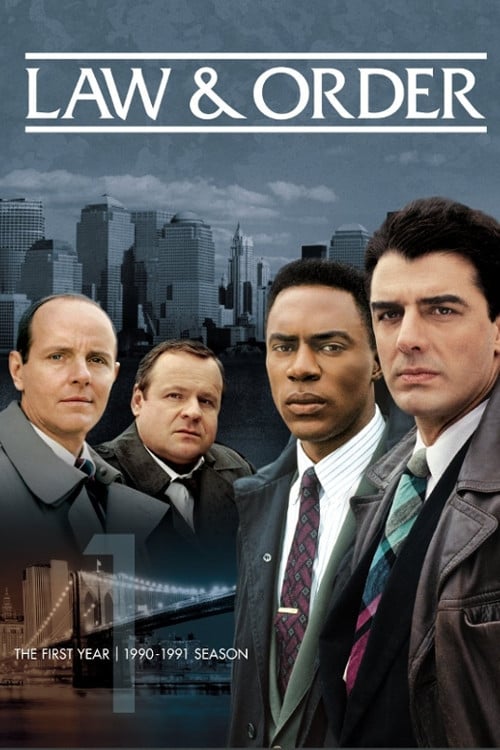
Law & Order
Season 1 Analysis
Season Overview
No specific overview for this season.
Season Review
Categorical Breakdown
Race relations are a recurring theme, with Assistant DA Paul Robinette being a main character. One episode specifically features a scenario where a claim of a racially motivated crime (white officers raping a black teen) is revealed to be a hoax used for political gain by an African-American congressman. The plot complicates a simplistic 'systemic oppression' narrative by prioritizing the investigation of the truth over political posturing. The casting is diverse without being primarily motivated by intersectional hierarchy.
The series focuses on upholding the institutions of 'Law & Order' within New York City. While crime and corruption are exposed, this follows the traditional format of a police procedural that seeks to cleanse, not condemn, the home culture and its governing structures. The narrative's goal is to find justice by utilizing the established system, showing a foundational respect for that system.
The main cast of detectives and prosecutors is entirely male, which precludes the 'Girl Boss' or 'Mary Sue' trope from being a central element. The show maintains a clear separation between the characters' professional and personal lives, ensuring that themes of motherhood as a 'prison' or career as the sole female fulfillment are not explored. The absence of central female leads means the plot cannot center on the perfection of female characters or the emasculation of men.
One episode focuses on the murder of a bisexual artist involved in the S&M subculture. One detective is shown expressing initial reluctance or prejudice toward investigating the victim's lifestyle, but the investigation and prosecution proceed anyway. Sexual ideology is present as a plot component but is not centered as a virtue, nor does the narrative lecture on gender theory or actively deconstruct the traditional family structure.
One of the detectives, Max Greevey, is specifically characterized as a Catholic conservative, which counters the vilification of traditional faith. The series addresses complex moral debates, such as abortion rights, by presenting a legal conflict rather than framing traditional religion as the root of evil. The entire premise relies on the existence of an objective 'Law' and a corresponding moral truth that justice must enforce.