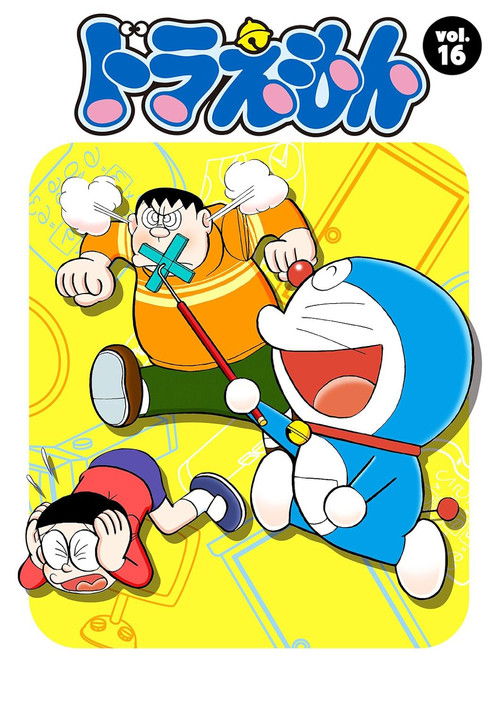
Doraemon
Season 16 Analysis
Season Overview
No specific overview for this season.
Season Review
Categorical Breakdown
The narrative rests on universal character archetypes: the lazy boy (Nobita), the bully (Gian), the rich snob (Suneo), and the kind girl (Shizuka). Characters are judged by their actions and merits, such as Nobita's academic failure or Gian's forced talent shows. No element of the plot relies on race or intersectional characteristics, and no forced insertion of diversity or vilification of 'whiteness' is present in this Japanese production.
The stories are fundamentally set in Nobita's home, school, and local neighborhood, presenting the setting as a familiar and cherished landscape for imaginative adventures. The series treats the family unit and ancestral concepts with respect or uses them as a source for comedic, non-cynical conflict. There is no deconstruction of Japanese heritage or framing of the home culture as fundamentally corrupt.
Shizuka Minamoto embodies the kind and competent female foil, a consistently moral character who is more capable than Nobita and most of the male cast. However, the narrative does not center on an anti-natalist message or an aggressive 'Girl Boss' trope; her defining trait is her good nature and intelligence, not her antagonism toward men or family. The traditional goal of Nobita wishing to marry her, and the celebration of motherhood in minor characters, maintains a complementarian, pro-family backdrop.
The season contains no explicit presence of sexual ideology. The central social dynamics are focused exclusively on a normative childhood setting, with Nobita's perennial crush on Shizuka providing the only focus on romantic pairing. Sexuality remains a private, off-screen concept appropriate for the youth demographic, and there is no lecturing or deconstruction of the nuclear family structure.
One episode includes a 'God Robot' gadget, which is a lighthearted use of a religious concept as a comedic plot device, where a child questions God's existence and a machine is used to grant wishes. This playfully reduces a transcendent concept to a tool, which is a slight embrace of the spiritual vacuum. However, the scene is used for a simple moral lesson, not a systematic attack on religious belief or an ideological embrace of moral relativism.